
Shrimp producers in Binh Dinh (a province in Vietnam’s South Central Coast) have achieved a high yield despite unfavourable weather conditions, all due to due to environmental monitoring. According to the Binh Dinh Fisheries Sub-Department, the province has almost 2,000 ha of water surface available for shrimp farming in 2021, including approximately 628 ha for intensive and semi-intensive farming techniques and nearly 1,371 ha for advanced extensive farming methods.
The crop was impacted by extended hot weather throughout the stocking and harvesting stages, impairing the growth and development of farmed shrimp. However, only 0.61ha of shrimp farming area was affected by environmental and white spot disease during the previous farming season, and there was no area affected by AHPND. The condition stood in stark contrast to the previous year, when almost 37.5ha of agricultural land was afflicted with disease outbreaks. As a consequence, shrimp farmers in Binh Dinh enjoyed a bumper harvest this year. In the early 2021 crop, most farmers in Binh Dinh can garner profits thanks to less disease outbreaks in shrimp.
According to Nguyen Van Hung, the local authority of Phuoc Thanh, the last shrimp harvest saw the development of diseases, despite the fact that farmers began stocking for just one month. Almost all shrimp farmers failed. However, shrimp farmers have strictly followed the authorities’ and local authorities’ recommendations this year, ensuring that the environment surrounding the water source for farming is protected, shrimp diseases are controlled, and damage is kept to a minimum. As a result, the majority of local shrimp farmers have a successful farming crop.
These accomplishments are the result of many contributions from competent authorities. According to the Binh Dinh Fisheries Sub-Department, prior to the start of the farming season, this unit conducted numerous rounds of environmental monitoring in aquaculture areas throughout the province to warn, recommend, and guide farmers on how to properly care for, manage, and protect water sources.
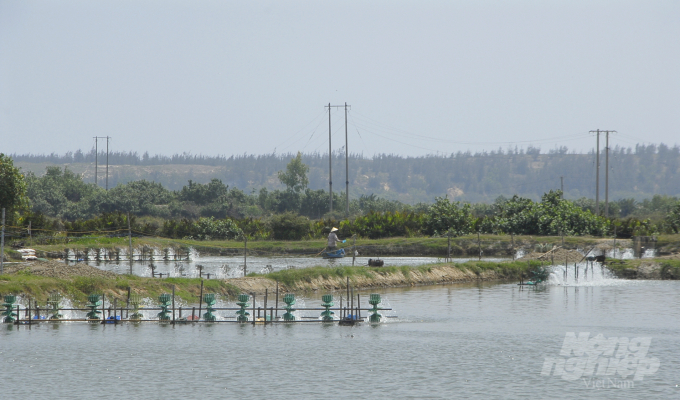
In the early 2021 farming crop, most farmers in Binh Dinh can garner profits thanks to less disease in shrimp. Photo: Vu Dinh Thung (nongnghiep.vn).
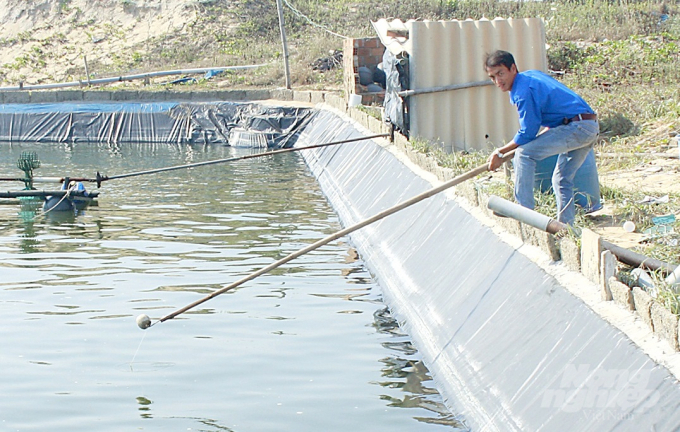
Additionally, Binh Dinh shrimp farmers are increasingly using microbial products to enhance the water quality and implementing environmental management to avoid shrimp diseases during extended periods of hot weather.â€
In mid-July, at the Binh Dinh Department of Agriculture and Rural Development’s preliminary conference for the first six months of the year, Tran Van Phuc, director of the sector in Binh Dinh, stated: “In recent years, shrimp farmers in Binh Dinh have changed farming methods from extensive to intensive and semi-intensive.” As a consequence, overall farmed shrimp output exceeded 3,500 tonnes in the first six months of 2021, with vannamei shrimp production reaching almost 3,313 tonnes, an increase of 4.2% over the same time last year.
He also stated that in the coming years, Binh Dinh will prioritise infrastructure investment in concentrated farming areas; developing intensive farming of vannamei shrimp through the use of advanced technology, organising shrimp farming cooperatives, and developing a value chain for the white-leg shrimp industry.
“In order to develop shrimp farming in a sustainable and effective manner, we hope that the government will pay attention to and support investment in farming infrastructure, ensuring the environmental sustainability of the water source for farming; receive additional technical guidance ; and introduce new technology that shrimp farmers can access and apply if it is suitable for shrimp farming. Environmental monitoring fosters shrimp farmers to avoid risks (nongnghiep.vn)


