
On 1 December, Aller Aqua went live and label the feeds with their respective CO2 equivalent. This number is printed on labels on feeds from the Danish, German, and Polish factories. The rest of its factories will add this declaration to their labels in the near future.
Going live is the result of a long process. In January 2021, it announced labelling of products with their CO2 equivalent. In August 2021. it achieved verification to do so by Bureau Veritas. And now, it is proud to be the first fish feed company in the world to have a verified CO2 equivalent on feeds.
By now, most people are aware of the negative impacts of human production in terms of CO2 emission. Sir David Attenborough recently addressed the COP26 climate summit delegates. He opened his speech by stating that the number of total carbon emissions is the only number that matters now. Carbon emissions heavily influence global warming. The increasing CO2 emissions worldwide make it is evident that things must change.
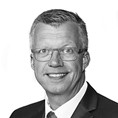
Henrik T. Halken (Group Vice President, CPO/CCO) explains, “It has been important for us to get this right, and to have a declaration that customers can relate to. We want to be transparent. We want to enable our customers to compare between competing products. Therefore, we work with aquaculture stakeholders to create a standard across the sector. This is also why it was important for us to obtain verification before launching. Food and feeds already have many labels. We want to create value by ensuring that our chosen system is widely applicable. At the same time, it must be relevant for the end consumers. The CO2 equivalent calculated on all our feeds enables all that.â€
In the press release, Aller Aqua said, “The verified CO2 numbers are the baseline and ensure our focus on emissions. From here we can start making choices about our raw materials. Feed performance and price is our priority. However, when we can lower the CO2 equivalent without compromising on quality or increasing the price, we will. We took the first step by phasing out the use of South American soya for our European factories.”
Displaying our CO2 equivalent is a way for the company to be transparent, whilst the verification validates the methods and results. Consumers increasingly request transparency about the food they buy. In the aquaculture value chain, it should be ready to meet these requests. Aller Aqua is proud to be first movers and hope to start a dialogue about the impact of production in the sector.
The idea for declaring CO2 equivalents came from looking at trends in other food sectors. It also came from the wish to create transparency, and a desire to be ready with emission data when our customers need us to be.
Therefore, it has taken bold steps to get to where it is today:
- Changed procurement to exclude South American soya for the European factories: Aller Aqua phases out soy from South America (aller-aqua.com)
- Declared to determine the CO2 equivalent of feeds and display it on products: South American Soya and CO2 (aller-aqua.com)
- Achieved verification of data by Bureau Veritas: Aller Aqua verified in CO2-labelling (aller-aqua.com)
- Can now label feeds from factories in Denmark, Germany, and Poland. The rest of our factories will follow in the foreseeable future.
“We hope to start a dialogue about emissions, that will spark interest and awareness in the sector and beyond. We want to help develop the entire aquaculture sector in a continuously sustainable direction. We know that sustainability is much more complex than choosing a low emission feed. However, in the aquaculture sector, we must discuss the parameters of sustainability as the foundation for the choices we make – including CO2 emissions.”


