
In 2021, Nikkei established the Nikkei Asia Award to recognize innovations from around Asia to encourage a free and prosperous economy in the region. About half of the advisory board for the new award are experts from outside of Japan. The award replaces the previous Nikkei Asia Prize, launched in 1996, which was judged mainly by Japanese experts.
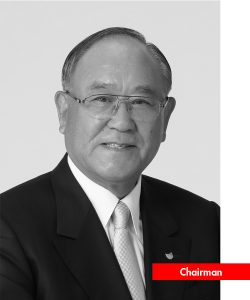
On 20 December, Fujio Mitarai, Chairman & CEO / Canon Inc. announced that the first winner of the Nikkei Asia Award as Singapore based lab-cultured seafood startup, Shiok Meats. He said, “I believe that shining a light on leaders in innovation from Asia is a meaningful endeavor that will encourage and embolden Asia-based people of all ages as well as organizations to devise solutions to a wide range of global issues.”
The selection process was overseen by the Nikkei Asia Award’s Advisory Board. To decide the winner of the first Award, this body of experts in Japan and other Asian countries met and deliberated online. After passionate debate on the question of what constitutes innovation, the Advisory Board examined, from a wide range of perspectives, activities that are opening new paths for the future of Asia.
After careful consideration from diverse Asian viewpoints, the Board winnowed down the choice of this year’s awardee to a single torch-bearer of innovation reflecting Asian values: Shiok Meats. This company is a food producer specializing in cultivated shrimp, crab and other seafood, a category of foodstuffs beloved by Asians.
Founded in 2018, Shiok Meats is a unique company in Asia’s emerging alternative food industry, as it focuses on shrimp, lobster, and crab. Its products have the potential to contribute to food security as the global population grows. They may also help resolve problems such as overfishing and environmental damage stemming from construction of fish farms — key issues for Asia.
“We want to use technology to make this world a better place, and to provide sustainable, environment-friendly, cruelty-free, healthy food for everybody,” Shiok Meats CEO Sandhya Sriram told Nikkei Asia in an interview.
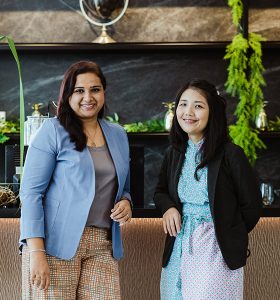
A stem cell scientist, Sriram, 36, co-founded Shiok Meats (shiok means “delicious” in Singaporean slang) with Ling Ka Yi, 34, who serves as the company’s chief technology officer. The two previously worked as scientists at Singapore’s Agency for Science, Technology and Research. Shiok Meats makes minced shrimp, lobster and crab, but the products have yet to be commercialized. The lab-grown meat can be used for dishes such as dumplings and spring rolls by mixing it with other ingredients such as pork and chicken. The company hopes to sell its meat to restaurants and to collaborate with food processors to make ready-to-eat products. It is aiming to begin commercial sales in mid-2023.
“We are looking at restaurants, and also we are looking at ready-to-eat products that you can buy from the grocery store or the supermarket,” Sriram said. The company plans to roll out products in Singapore first and is also looking at other markets, including Malaysia, Indonesia, Japan, South Korea and Hong Kong, subject to regulatory approvals.
Unlike plant-based proteins that use ingredients such as soybeans, Shiok Meats’ products are made from animal cells, which the company believes results in meat that tastes closer to actual seafood. But culturing meat is no simple task. It requires advanced technology. After extracting muscle and fat cells from live animals, the meat is cultured. Cells are stored in a stem cell bank so that the company does not have to extract new cells.
“Currently, we are still the only company in the entire world working on cultivated shrimp,” said Sriram, stressing that its technology is “very unique.” The company has first-mover advantages, including in obtaining patents, the CEO said.
The three-year-old company has attracted investment and talent from outside Singapore, raising about $30 million so far from such investors as Japanese packaging manufacturer Toyo Seikan Group Holdings and South Korean food delivery platform Woowa Brothers. About a third of its 30-strong staff are from outside Singapore, Sriram said.
Alternative meat has drawn attention recently, with backers expressing hope that it can improve the environment, reduce food waste and help address potential future food crises as the world’s population rises. “There will be 10 billion people in the world. So we need more protein and more products,” Sriram said. The products are also creating new markets, such as “plant-based meat” for vegetarians.
Singapore’s government is keen to nurture new food technologies by creating a business-friendly environment and fostering a cluster of alternative meat startups from the city-state and elsewhere. Last year, Singapore became the first country to approve a lab-grown meat product. “Hopefully a few countries [will follow Singapore] in the next few years,” she said.
Looking ahead, Shiok Meats plans to build a pilot plant in Singapore next year to enhance its research and production capabilities. “That will be the commercial plant in which we’ll produce the product for restaurants,” Sriram said, adding that the company will start by making five to six tons of meat per year.
By scaling up, the company aims to reduce the cost of its products. As far as cultured shrimp is concerned, the target price is $50 per kilogram — comparable to high-quality natural shrimp, compared with a current cost of about $800 to $1,000 per kilogram, she said.
Shiok Meats also hopes to license its technology to other food processors in the longer term. “Apart from us being a manufacturer of these products, we would definitely like to make sure that our technology is adopted by other food companies. So we are looking at a B2B strategy as well, where we license our technologies to other food companies,” she said.


Founded just this year, the Nikkei Asia Award benefited from numerous recommendations sent in by a wide array of organizations and experts in Japan and around the world. Nikkei Asia Award Advisory Board is deeply grateful to these many organizations and experts for their cooperation and ask for their and your continued support and encouragement of the development of the Nikkei Asia Award. See here for the award nomination and process. NIKKEI ASIA AWARD_A4_ENG_0611.ai


