
The Department of Agriculture (DA) has developed a cheaper aquafeed which uses locally produced raw materials, that could bring down the production costs of tilapia and milkfish by as much as PHP10/kg amid soaring prices of imported feed products.
In a news statement, the DA said a joint project by the Southeast Asian Fisheries Development Center-Aquaculture Division (SEAFDEC-AQD) and the National Fisheries Research and Development Institute (NFRDI) has formulated a locally-sourced “efficient, sustainable and low-cost†aquafeed.
The formulated feed, which was developed by Dr. Roger Edward Mamauag of SEAFDEC-AQD, uses by-products from corn and poultry abattoirs as well as coconut-fermented copra meal, replacing imported fishmeal as a protein source.
The feeds will be field tested for milkfish and tilapia, which are the top aquaculture commodities in the country. The field tests were conducted by SEAFDEC-AQD and NFRDI in partnership with the Bureau of Fisheries and Aquatic Resources (BFAR).
“Covid-19 pandemic and Russia-Ukraine conflict, have a ripple effect in the whole seafood value chain. So it is not just food and fuel, it also affects feed both for livestock and aquaculture since the majority of our feedstuff is being sourced outside the country,†Agriculture Secretary William D. Dar said.
“What we need are sustainable technologies and interventions that can provide our fishing communities locally-available ingredients providing added benefits of cost savings and reduced imports, at the same time,†Dar added.
The DA said initial trial results showed that the SEAFDEC-AQD formulated aquafeed can “compete with the commercially-fed in terms of growth performance and other biological parameters.â€
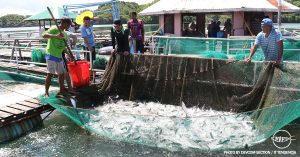
“One of the major problems that we wanted to address through this project is to lower the cost of feeds, which comprises 50 percent to 70 percent of the production cost. By making the feed cost-effective and sustainable it will increase profits and encourage more fish farmers to venture in aquaculture,†said NFRDI Director Lilian Garcia.
The DA said the use of locally-available raw materials made the SEAFDEC-AQD formulated feeds cheaper compared to commercially produced ones, especially since protein sources abroad have become more expensive due to ongoing Ukraine-Russia war.
“Commercial fish feeds usually consist of fish meal, which is both expensive and resource-intensive since it requires harvesting fish from the oceans for feed production,†it said. “While plant-based protein sources like soybean meal and wheat gluten can provide lower-cost alternatives, the ongoing Ukraine crisis has made prices of imported feedstuff volatile and therefore unsustainable,†it added.
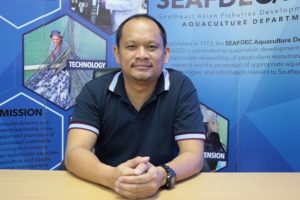
Mamauag said the SEAFDEC-AQD feeds cost about PHP27/kg for milkfish and PHP24/kg for tilapia. “Commercial feeds cost PHP33 to PHP35/kg for milkfish and PHP32 to PHP34/kg for tilapia. From this price, a reduction of PHP6 to PHP8/kg or 18 to 23 percent for milkfish and P8 to 10/kg or 25 to 32 percent for tilapia in feed cost were obtained.”
In April, local aquafeed manufacturers reiterated their call to the DA to lift the import ban on porcine processed animal protein (PAP) from Italy to avert further increase in the prices of domestic aquafeed products. They said that PAP is a vital ingredient in aquafeed, serving the bulk of its protein requirement.
Tilapia, milkfish and shrimp require a high protein diet compared to hogs and poultry, which only require low protein in their feeds, according to Chris Co, Vice President for Marketing of Oversea Feeds, said in a recent news statement. “One good source of protein, aside from fishmeal, is PAP. Fishmeal price is increasing and there is not enough of it to go around,†Co added.
Advocacy group Tugon Kabuhayan said the closure of Italy, which accounts for 70 percent of the country’s annual 150,000 tonnes imported PAP, might derail the growth of the aquaculture industry and result in job losses. The production of PAP involves high heat treatment, which can inactivate viruses like African swine fever (ASF). In January, the DA temporarily banned the importation of pork products, including PAP, from Italy after the European country confirmed an outbreak of ASF.
“The biggest impact of the ban on imported PAP from Italy is the higher cost of aquafeeds. Every PHP 1 of additional feed cost roughly translates to over PHP2/kg of fish because a fish farmer needs two kg of feed for a fish to produce each kilogram of fish,†the group said.


