
The project involves an equity investment of up to USD15 million in Australis Holdings, Inc. (AHI) for the Australis Climate-Smart Barramundi and Seaweed Aquaculture Project in Vietnam. The administration of a grant of up to USD3 million is to be provided by the Climate Innovation and Development Fund (CIDF).
The project will support the increased production of barramundi and seaweed in ocean-based farming systems in Vietnam, promoting climate-resilient production of high-quality protein. The project will foster technology transfer of best practices in sustainable aquaculture and improve gender equality standards. The project is fully aligned with the Government of Vietnam’s goal of developing aquaculture in a sustainable manner, with a focus on developing high-level technology farming of major aquatic species for export, protecting the ecological environment, preventing disease, and ensuring food safety.
The project is aligned with the agribusiness strategy of the Operational Plan for Private Sector Operations, 2019-2024, which aims to promote climate-resilient and more environmentally sustainable business models. It is also aligned with Asian Development Bank (ADB)’s sovereign operations in agriculture and natural resources, including the pipeline project, Restoration and Sustainable Management of the Coastal Forests in the Mekong Delta.
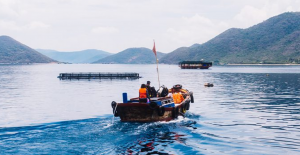
Australis is the world’s leading producer of sustainably-farmed barramundi and a pioneer in tropical marine farming. Founded in 2004 in Turners Falls, MA., Australis Aquaculture started its offshore cage farming of the barramundi in 2008 in 8-12 miles off Vietnam’s Van Phong Bay. It received BAP certifcation in 2018 and in 2021, Australis becomes the first farm certified under ASC’s Tropical Marine Finfish standard. After harvest, cages are fallow with seaweed cultivation to support the ecosystem.
In 2018, it started that Greener Grazing™ project, an ambitious, one-of-a-kind project that is making scalable Asparagopsis seaweed farming a reality. The company stated that this has the potential to virtually eliminate methane emissions from livestock digestion by introducing seaweed into ruminant animal diets while restoring ocean habitats and revitalizing coastal communities.The project leverages Australis Aquaculture’s expertise and track record of bringing innovation to market.


