
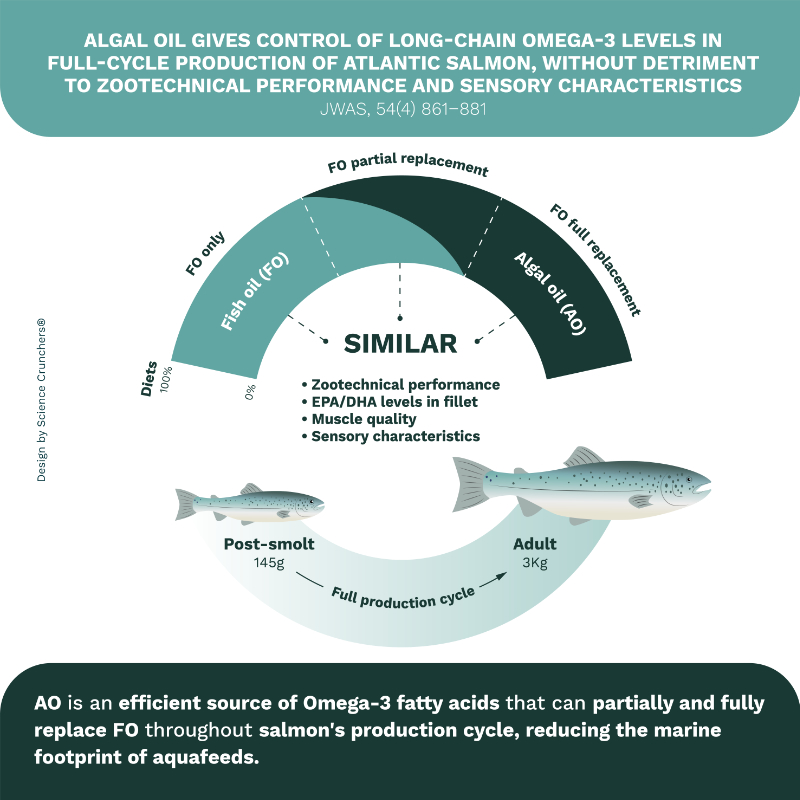
This study assessed the suitability of partial or full (100%) replacement of fish oil (FO) with microalgal oil (AO) in Atlantic salmon diets. This represents a novel approach as it is one of the first studies to follow fish through the entire production cycle from post-smolt (145 g) to a 3 kg harvest size. Three experimental trials were conducted consecutively and fish were fed a control diet containing FO as the main source of omega-3 LC-PUFA, with test diets containing graded levels of AO and other plant oils (rapeseed and soybean). No differences in zootechnical performance were found and results showed that AO replacement did not negatively affect growth, muscle quality, or EPA/DHA levels in fish fillets. A variety of sensory characteristics were also compared and raw salmon muscle from fish fed AO diets had favourable odor, taste, texture, appearance, or color. This study clearly demonstrated the suitability of AO as an effective alternative ingredient in salmon feeds and fully supports the idea that AO is a suitable FO replacement for salmon feeds and greater use of AO would reduce the marine footprint associated with aquafeeds.


