
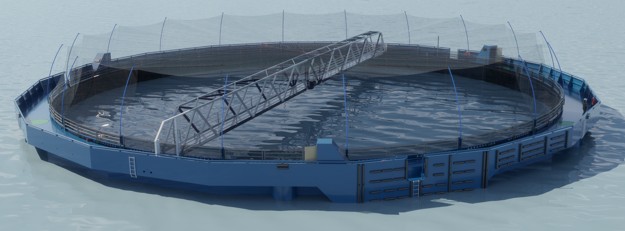
SalMar and Lerøy are taking a new step in developing Norwegian aquaculture through a joint initiative on the next generation of closed production technology – Aquatraz C2. For both companies, this is part of their innovation-driven strategy to develop and test various technologies for the future of aquaculture.
The project includes the construction of six Aquatraz C2 units supplied by Seafarming Systems. The technology has been developed in collaboration with SalMar and Lerøy, building on experience from both the Aquatraz S1 delivered to Lerøy and the first four Aquatraz units developed for SalMar.
Frode Arntsen, CEO of SalMar ASA said,
“If everything goes according to plan, the first fish will be stocked in these units in the first quarter of 2027, with full operations from 2028.”
Parts of the construction will be produced in modules in China, while assembly will take place at a Norwegian shipyard. The project also involves technology suppliers from Norway and Europe.
Purpose and background of this project is to help solve key challenges related to salmon lice and emissions.
Henning Beltestad, CEO of Lerøy Seafood Group ASA said,
“We have worked systematically and purposefully on technology development for many years, and have made great progress with submerged cages and testing of semi-closed solutions. Now we are taking this a step further.”
SalMar and Lerøy emphasised that this is not a signal that all production will move into closed systems, but a clear response to the shared ambition of the industry and authorities to develop new solutions that can contribute to sustainable growth in Norwegian seafood production.
The companies are contributing to important technology development in Norwegian aquaculture and strengthening the Norwegian supplier industry, which is a globally leading innovation driver in the sector. The collaboration provides increased scale, knowledge sharing and reduced risk.
Both companies are clear that traditional technology will continue to be the essential foundation for Norwegian aquaculture, particularly at more exposed locations. Development of traditional equipment will continue in parallel with investments in new technological solutions.
In this way, Norway can play an increasingly important role in global food production while contributing to solutions for key environmental challenges facing the industry. Our goals are also increased food production, secure jobs and creating industrial ripple effects in Norway. The various production technologies complement and reinforce each other.
Alf Reidar Sandstad, CEO of Seafarming Systems AS, commented on the system,
“Aquatraz C2 is the result of more than ten years of development work, with continuous improvement and learning from practical operations. This gives us a solid technical and biological foundation for taking the next step in closed-cage development. The key is cages with large farming volume, high water exchange, low energy consumption and competitive cost.”
The companies are now preparing for delivery of the cages in about one year, so that sea production can begin. This requires the necessary clarifications and approvals from the authorities. It is crucial that the authorities ensure stable framework conditions during this phase.


