
Crawfish Himalayan Limited inaugurated through landmark sovereign-private partnership between Singapore Crawfish and DHI. This establishes a world-record production facility and unlocking direct access to Asia’s multi-billion-dollar crawfish market
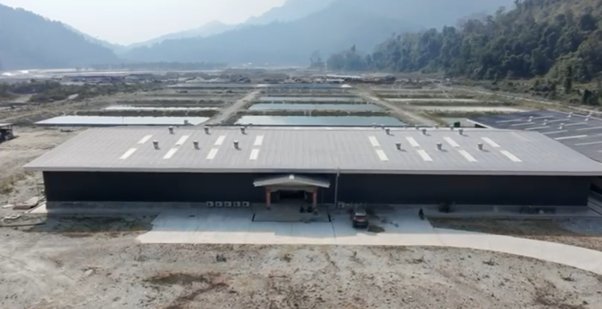
Crawfish Himalayan Limited (CHL) the world’s first and largest high-technology crawfish hatchery has been officially inaugurated in Phuentsholing, in the southern foothills of the Kingdom of Bhutan. The facility was established through a landmark sovereign-private partnership between Singapore Crawfish (SGCF), Asia’s leading commercial crawfish technology and genetics company, and Druk Holding and Investments (DHI), the investment arm of the Royal Government of Bhutan.
CHL represents the first purpose-built, high-technology commercial crawfish hatchery operating at institutional scale in the Himalayan region, and its certified minimum production capacity of up to 18 million premium quality crawfish/year makes it one of the largest facility of its class globally. No comparable facility has existed anywhere in the world.
The location was selected with deliberate strategic precision: southern Bhutan sits at the intersection of two of the world’s largest and fastest-growing protein markets, India and China, while its Himalayan water geography provides a production input advantage that no lowland competitor can replicate.
In framing the partnership structure, the principals describe CHL not as a one-country facility but as the anchor and proof of concept for a replicable sovereign aquaculture infrastructure model, designed to be licensed and deployed across willing government partners throughout ASEAN and South Asia.
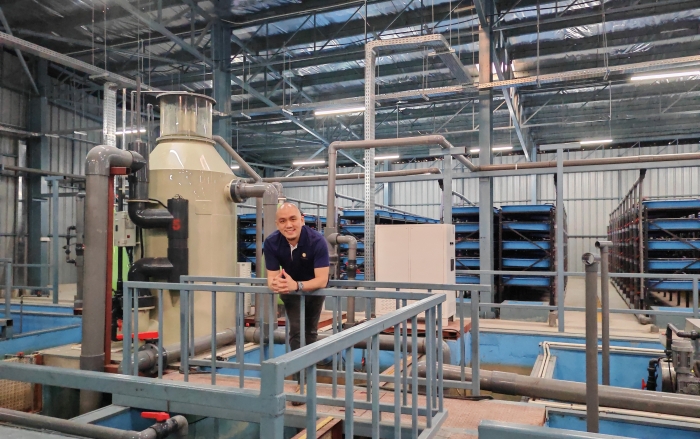
Desmond Chow, Founder & CEO, Singapore Crawfish (SGCF) said,
“This inauguration is the result of years of technology development, genetics work, and sovereign partnership-building. Bhutan gave us pristine water, visionary leadership, and the strategic location to change how the world thinks about crawfish production as part of food security.”
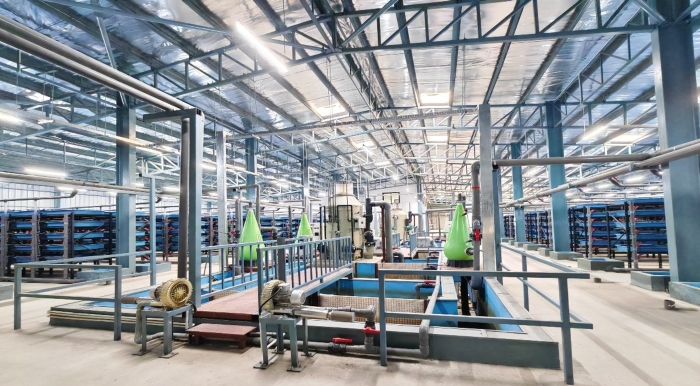
The Crawfish Himalayan Limited facility has been constructed and equipped to institutional-grade specifications, comprising a fully integrated production system from broodstock genetics management through certified juvenile delivery.
The key facility parameters are as follows:
- Indoor climate-controlled hatchery footprint: approximately 8,000 m2, housing all core high tech hatchery systems including broodstock tanks, spawning management infrastructure, larval rearing systems, and juvenile grow-out units
- Adjacent outdoor grow ponds: 8 acres of purpose-designed crawfish production ponds providing supplementary grow-out capacity directly contiguous to the hatchery
- Partner and investor expansion area: Additional 150 acres of adjacent land, cleared and development-ready for structured grow-out partnerships, investor-activated crawfish farming operations, and downstream supply chain build-out
- Production capacity: A minimum of 18,000,000 premium-grade crawfish juveniles/year at full operational capacity, delivering a consistent, high-health fingerling supply to downstream farmers
- Integrated broodstock holding and genetics program: maintaining a diverse, high-performance genetic base to ensure consistent juvenile quality, disease resilience, and breed improvement over successive production cycles
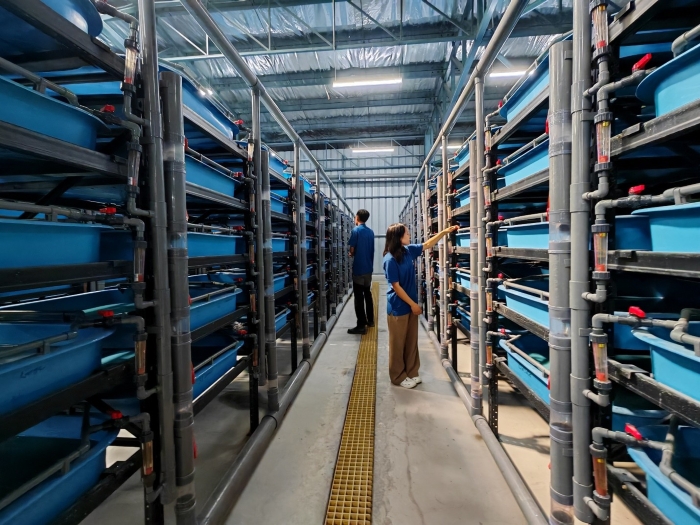
The facility is designed and operated as a complete production system, from the selection and management of founding broodstock genetics through the delivery of certified, ready-to-stock juveniles to downstream farming operations across Bhutan, India, and targeted regional markets.
Technology & Genetics from Singapore Crawfish (SGCF)
The complete technology architecture of Crawfish Himalayan Limited (CHL) was designed, built and operationalised by Singapore Crawfish (SGCF) the sole technology and genetics partner of CHL and the definitive regional authority in commercial crawfish production systems. SGCF’s contribution to this facility cannot be disaggregated from the facility’s world-record standing: without SGCF’s proprietary systems, this highly functional aqua tech system would not exist at this altitude, in this water chemistry, or in this climate profile.
SGCF’s specific contributions to CHL include a proprietary hatchery water management structure and recirculating aquaculture system (RAS) specifically adapted for Bhutan’s high-altitude conditions and glacial water chemistry; a genetics program providing the founding broodstock pool, selected for higher growth rate, better fecundity, juvenile survival, and adaptability to Himalayan production parameters; and a proprietary feed formulation, an 12-ingredient precision nutrition formula developed specifically for Himalayan crawfish production conditions, providing optimised early-stage nutrition matched to the developmental requirements of juveniles under local temperature and water quality profiles.
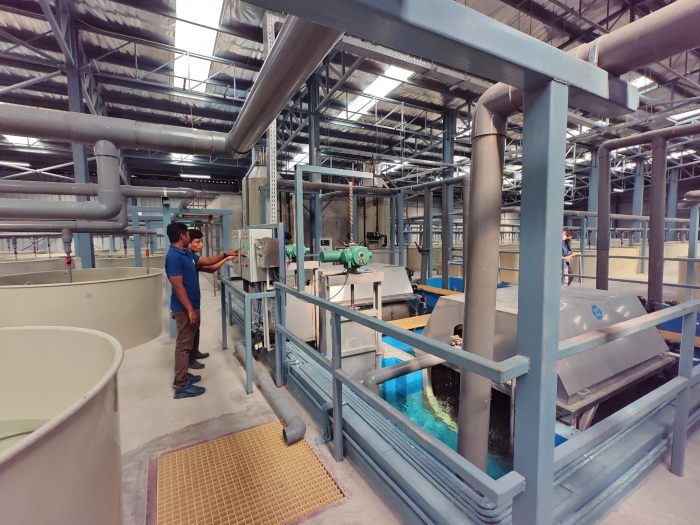
SGCF has also transferred operational management protocols, hatchery SOPs, and staff training programs to ensure production consistency. The company is positioned as the ongoing technology custodian of CHL and holds the licensing model for replicating this sovereign hatchery architecture across future government partnerships in the region.
The Himalayan Advantage
The selection of southern Bhutan as the home of the world’s first high-technology crawfish hatchery was not merely strategic, it was scientifically motivated. The glacial waters descending from the highest peaks of the Himalayan range provide a production input of exceptional purity: consistently low pathogen load, stable mineral composition.
For a species whose juvenile survival rates and long-term immune competence are directly correlated with water quality, this is a durable competitive advantage that geography cannot transfer to competitors. Clean-air, low-density highland environments also reduce biosecurity risk and antibiotic dependency, a commercial and regulatory advantage as importing markets in China and India tighten residue and antibiotic-free certification standards for aquaculture products.
Himalayan-origin Crawfish
The resulting product provenance story, Himalayan-origin crawfish, produced in Bhutan’s pristine glacial catchments, certified antibiotic-reduced and sustainably farmed positions CHL’s output for premium market access in China’s increasingly quality-conscious food service sector and India’s expanding premium seafood retail segment. This is a positioning that no flatland competitor operating under conventional water source conditions can replicate. CHL Leadership Team said,
“The Gelephu and Phuentsholing corridor was always Bhutan’s gateway to South and Southeast Asia. CHL transforms that geographic fact into a living food security asset, one that produces sovereign-grade protein from waters that no other jurisdiction in the region can match. This is Bhutan claiming its place in Asia’s protein future.”
Food Security Mission
Being landlocked, Bhutan’s per capita protein consumption from aquatic sources has historically been constrained by the absence of domestic aquaculture infrastructure at commercial scale. CHL directly addresses this gap. As a sovereign food security installation, not merely a commercial enterprise the facility provides the Kingdom with its first domestic crawfish protein production capability, reducing dependency on imported animal protein and creating a resilient, domestically-anchored supply chain.
The facility’s fingerling supply mandate extends the food security impact beyond the hatchery boundary. As the hatchery creates the upstream foundation for hundreds of downstream crawfish farming operations across Bhutan’s southern districts.
Each fingerling stocked by a Bhutanese farmer represents a unit of domestic protein production and a unit of rural livelihood generated by sovereign aquaculture infrastructure. The 150-acre expansion area adjacent to the hatchery is specifically designated for this downstream farming ecosystem: partner-activated grow-out operations that can feed directly into both domestic consumption and regional export channels.
Export Market Opportunity: India and China
Bhutan’s proximity to India’s northeastern states with Gelephu sitting directly at the Assam border crossing gives CHL a supply-chain advantage for the Indian market that no offshore hatchery competitor can match. India’s aquaculture market reached approximately USD 21.9 billion in 2024 and is projected to grow at a CAGR of 5.5% through 2030, according to Grand View Research*, reflecting structural growth in domestic protein demand from a population of 1.4 billion increasingly oriented toward seafood consumption.
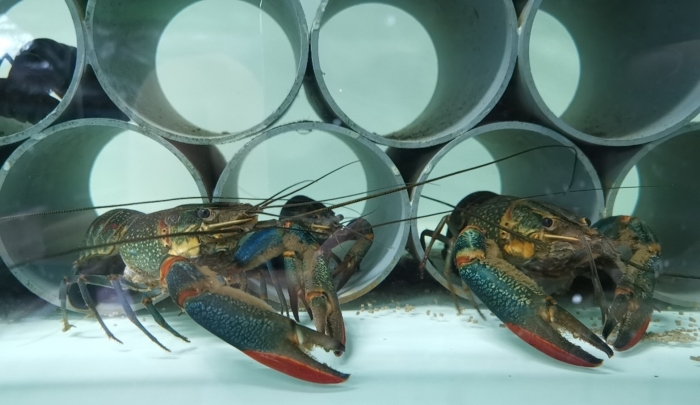
China is the world’s dominant crawfish market by every measurable dimension. According to official Chinese National Bureau of Statistics data reported by the USDA Foreign Agricultural Service (2025 China Fishery Products Report), Chinese domestic crawfish production reached 3.2 million metric tons in 2023 — an increase of 9.4% year-on-year, with Hubei, Anhui, Hunan, Jiangsu, and Jiangxi provinces accounting for over 90% of total national output.
Chinese industry associations, in partnership with local governments, have actively expanded consumer crawfish culture through chef competitions, restaurant promotions, and tasting events. Domestic demand continues to outpace production growth, creating persistent structural import demand for premium-quality crawfish and crawfish juveniles.
The Asia-Pacific crayfish market, estimated at USD 2.3 billion in 2024, is projected by Cognitive Market Research to expand at a CAGR of 15.2% through 2031. The global crayfish market itself, valued at approximately USD 10.5 billion in 2025, is forecast across multiple analytical houses to approximately double in value by the early 2030s. Within this market, farmed crayfish, the category CHL produces, accounts for 58.3% of global revenue as of 2025, driven by the consistency, quality, and supply reliability advantages that controlled hatchery production delivers over wild-capture alternatives.
For CHL, the geographic calculus is straightforward. Southern Bhutan’s Gelephu corridor sits directly on the India-Bhutan border, providing road-accessible logistics to Indian northeastern markets and, via the Kokrajhar-Gelephu railway link currently under construction, a rail corridor to India’s broader north and northeast.
For Chinese market access, the northern Bhutan-China interface, combined with southern India gateway transit, provides overland reach to southwestern Chinese crawfish-consuming provinces that no Southeast Asian or island-based competitor can approach on logistics cost terms. A Himalayan-origin, premium-branded live and juvenile product commands pricing power in the Chinese food service and aquaculture input markets that commodity-grade product from major Chinese producing provinces cannot.
Investment and partnership opportunity
Crawfish Himalayan Limited and Singapore Crawfish are actively seeking regional expansion partners, structured grow-out investors, downstream farming operators, and sovereign government collaborators. The 150-acre expansion area adjacent to the CHL hatchery is available for structured partnership discussions beginning immediately. Interested parties may engage through the channels below.
For sovereign governments across ASEAN and South Asia with freshwater aquaculture ambitions and food security mandates, Singapore Crawfish extends a direct invitation to explore the sovereign hatchery co-development model, bringing SGCF’s proprietary technology, genetics platform, and operational expertise into partnership with government-backed investment capital and locally available natural resources. The blueprint has been proven in Bhutan. It is ready to be replicated.
*Sources: Grand View Research, India Aquaculture Market Outlook 2025-2030; FAO, The State of World Fisheries and Aquaculture 2024; Ministry of Fisheries, Animal Husbandry & Dairying, Government of India, PIB Press Release, January 2026; USDA Foreign Agricultural Service, 2025 China Fishery Products Report (Beijing); Cognitive Market Research, Asia Pacific Crayfish Market Report 2025; Research and Markets / 360iResearch, Global Crayfish Market 2025-2032; IMARC Group, Global Crayfish Market Forecast 2025-2033; DataBridge Market Research, Global Crayfish Market 2033


