
Why marine ingredient scarcity is reshaping the future of aquaculture.
French insect meal scaleup Innovafeed released a white paper “Beyond replacement” which noted that over the past months, the aquaculture industry has entered a new phase, marked by tightening supplies of marine ingredients, record fishmeal and fish oil prices, and growing pressure on global feed value chains. Rather than asking “How do we replace fishmeal?”, the paper explores a broader question: how can the industry build more resilient, functional and sustainable feed strategies?
For decades, aquaculture has relied on fishmeal and fish oil as its nutritional foundation. Today, that model is under increasing pressure. Several indicators point to a structural shift. The question is no longer whether shortages will occur, but how the industry can adapt. Historically, alternative proteins were developed to replace fishmeal.
Authors, Roel Boersma, Product Strategy and Marketing Director and Maye Walraven, Chief Business and Impact Officer at Innovafeed noted that,
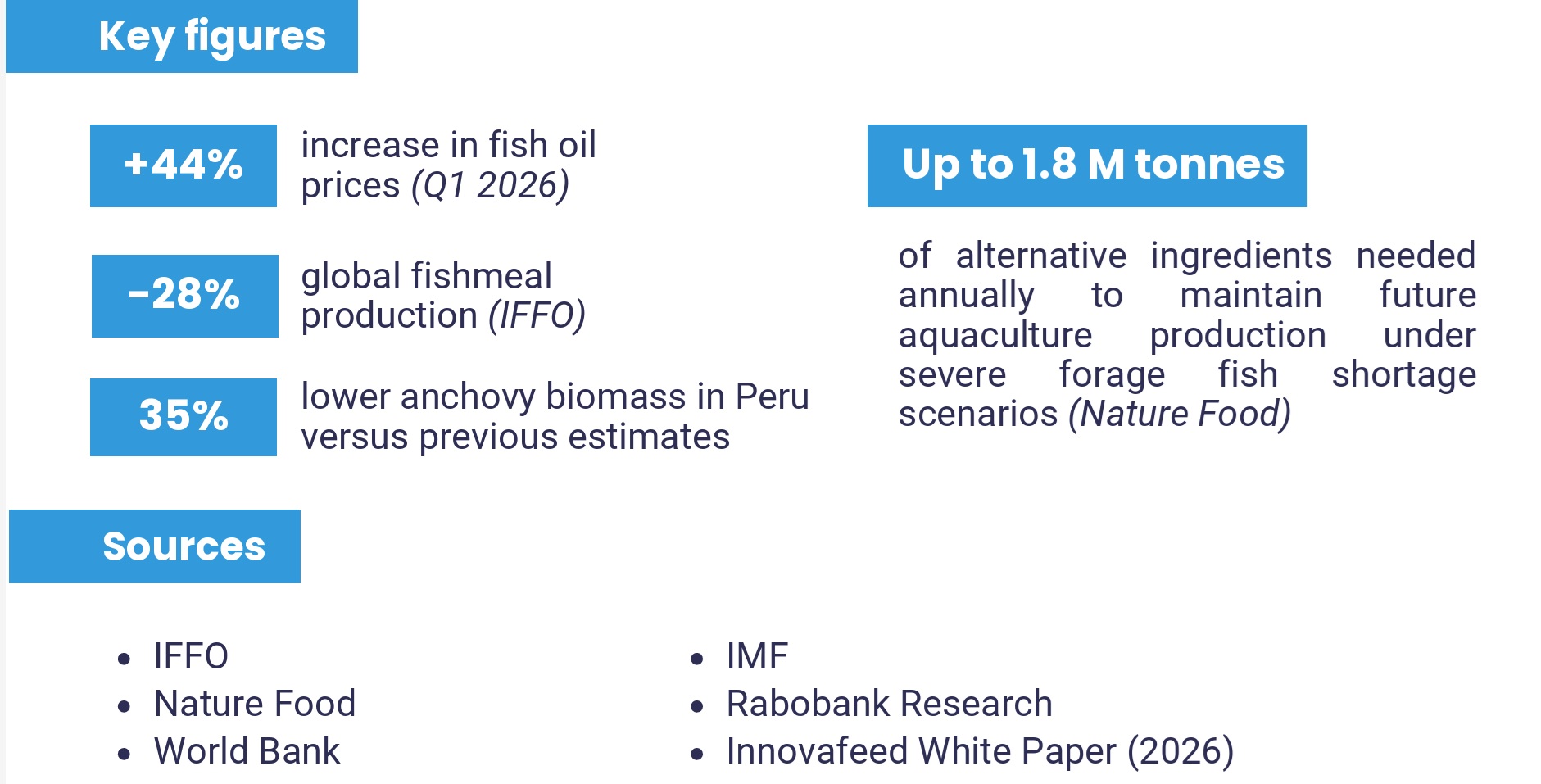
“Since May 2026, the sector has been living through the most severe fishmeal crisis on record. Supply of marine meals has been broadly flat at 5.5-6 million tonnes for years, while the high-value aquaculture segment most dependent on it keeps growing at around 3% a year. The cost base of the fishery itself is rising too: fuel, labour, tightening regulation and the steady expansion of protected areas all lift the real cost of landing wild fish, and those costs do not fall back when a season improves.”
They added,
“By mid-2026, super prime fishmeal was trading around USD 4,000 a tonne, against a commodity benchmark of roughly USD 2,100-2,400 and premium omega3 fish oil was approaching USD 7,000. For aquafeeds, the challenge is different. The question is no longer whether shortages will occur, but how the industry can adapt.”
Ingredient replacement to ingredient optimisation
The objective is no longer simply to substitute marine ingredients, but to use them where they deliver the highest biological value while complementing them with functional ingredients that improve animal performance, resilience and supply security. This represents a shift from ingredient replacement to ingredient optimisation. Marine ingredient scarcity is becoming structural, not cyclical scarcity changes the role of alternative ingredients. Functional ingredients are becoming strategic assets.
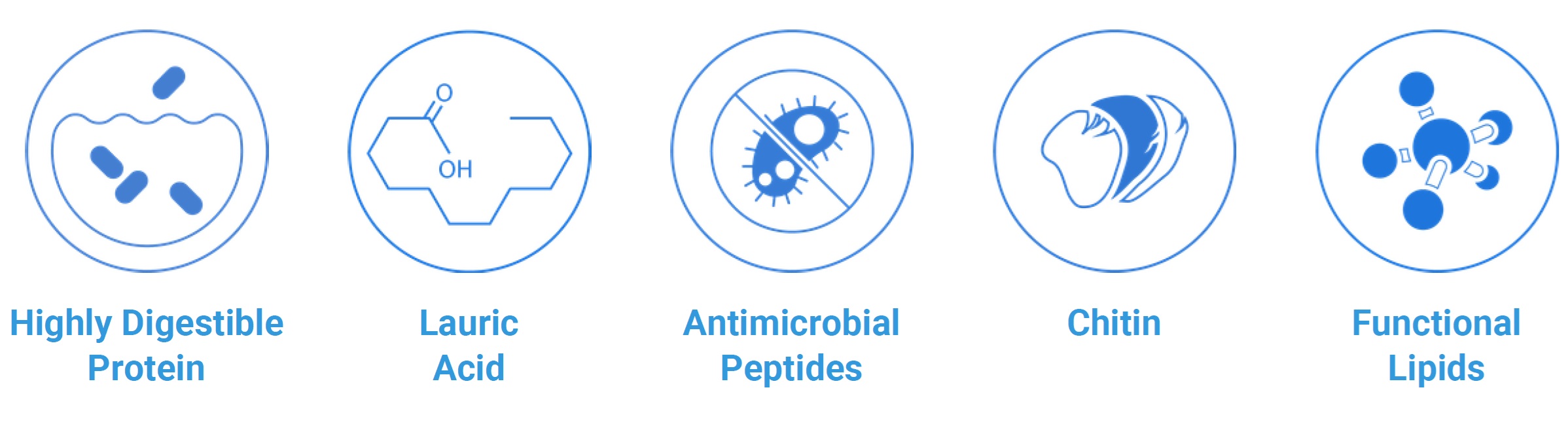
Innovafeed believes that the next generation of aquafeeds will combine several complementary ingredients rather than rely on a single substitute. Hilucia™ Black Soldier Fly Larvae (BSFL) ingredients naturally provide: Highly Digestible Protein Lauric Acid Antimicrobial Peptides Chitin Functional Lipids. These compounds contribute not only to nutrition but also to gut health, immune support and animal robustness.
A shared challenge, and a narrowing window
The scale of the task is real. The Nature Food modelling suggests that simply holding 2022 output steady, under a combined scenario of tighter management and climate impacts, would call for roughly 1.8 million tonnes of alternative ingredients every year. That figure is both the measure of the challenge and the size of the opportunity for ingredients that can credibly fill the space.
Innovafeed offers this perspective not as a large incumbent supplier at 6,000 tonnes a year. It is only a contributor among many but as a partner working alongside formulators on a problem the whole sector share. It calls for building a resilient ingredient basket together, so that the current crisis is resolved and the next one is prepared for. The window to act from a position of strength is narrow.
Those who secure functional, decoupled supply and forge these partnerships now will help shape the next decade of aquaculture nutrition; those who wait will be left competing for what remains, at prices set by the shortage. Scarcity has already decided that the industry will move beyond marine dependency. The open question is who leads the transition, and who is left to follow. Access the white paper here.
Innovafeed’s Nesle production site has a capacity of 15,000 tonnes of insect protein per year, and its production continues to scale up every year. In fact, the Nesle production unit has already produced more than 15,000 tonnes of protein and oil since its commissioning. Over the same period, production volumes have increased tenfold, while production costs have been divided by seven. Innovafeed says that the scale achieved – critical for product competitiveness – is unprecedented in the insect industry and is currently around three times larger than the world’s second-largest producer.


