
Aquaculture Europe 2026 (AE2026) will be held on 28 September – 1 October in Ljubljana, Slovenia. AE events are all about communication with the sector. AE2026 will feature a 3-day conference and a trade exhibition, where regional and international companies will present their latest products and services. The AE events also feature:
- Special forums for industry, where presentations and panel discussions focus on relevant and timely issues for the sector.
- Industry-oriented events around the trade exhibition
- Technical tours
- Meetings of European associations, satellite workshops of EU projects and other events.
“Aquaculture in Global Change” Food systems, including aquaculture, are being challenged by changes resulting from global warming. These affect all forms of aquaculture, in inland and coastal marine regions, and especially small and medium sized operators that may not have the financial and operational capacity to implement adaptation and mitigation measures. Seasonal “extremes” in water temperature, availability and oxygen content and (for coastal areas) salinity, pH, sea level will have varying effects on aquaculture production that may require the diversification of cultured species.
Diseases, parasites, predators, non-indigenous species and algal or jellyfish blooms can also decrease production and challenge aquatic animal welfare. These effects may require the relocation of sites or the allocation of new sites for production. However, these changes may also provide opportunities to diversify to new species production or the combined production of species that can better mitigate effects. Opportunities also lie in the development of a clear and transparent credit system for the carbon sequestration and other ecosystem services that aquatic animal groups, whether in freshwater or coastal habitats, provide.
Taking place in the beautiful Slovenian capital of Ljubljana, AE2026 will put the focus on adaptation to climate effects, the latest research on species adaption capacity and the health/ welfare/ nutrition/ breeding factors that underline this. While Slovenia has a low aquaculture production, it has plans for development of existing and new production methods and species and it is at the heart of central/southern Europe adjacent to Italy, Croatia, Hungary and Austria – and hence providing a regional focus for both inland and marine aquaculture.
AE2026 will take place at the Gospodarsko Razstavisce Exhibition and Congress Centre, about 20 minutes walk from the city centre.
AE2026 has announced plenary speakers.
“Aquaculture – from Sustainability to Resilience.”
Jurica Jug-Dujaković, MJD Consulting, Croatia.
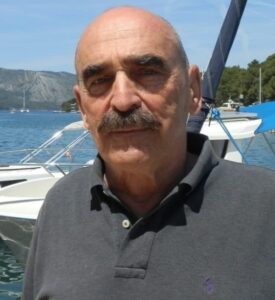
As we move from “Sustainable Aquaculture” to “Resilient Aquaculture” the presentation will assess cultured species and the resilience of production systems. It will also review new technologies, production methods, and management strategies as a first step towards enhancing aquaculture production in response to climate change. Understanding these variables is essential for assessing the vulnerability of aquaculture systems and developing site-specific adaptation strategies that will also contribute to the food security expectations.
There are already small-scale examples combining aquaculture production with other agricultural strategies, either as integrated or separate systems, resulting in a symbiotic circularity. These technological and ecological innovations offer actionable pathways for climate adaptation and mitigation in both marine and freshwater environments and several case studies will be presented.
“Breaking the Bubble: Making Aquaculture’s Stories Go Global.”
Larissa Lewis, SALT, UK and James Sibley, Aquaculture Creator, USA.
Despite rapid advances across farming systems, nutrition, health and technology, much of the sector’s progress remains largely invisible outside industry and research circles. As a result, aquaculture continues to face challenges around public understanding, workforce recruitment, investment confidence, social acceptance and the visibility of research and innovation. This combined presentation explores how aquaculture stories can move beyond this industry bubble – and what happens when they do.
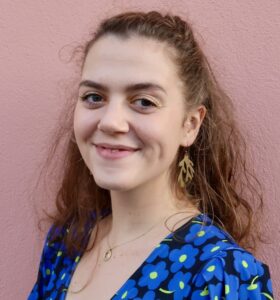
Part 1 –Larisa Lewis: How Aquaculture Stories Travel
Aquaculture research generates a vast amount of knowledge, yet much of this knowledge remains difficult for wider audiences to discover. The challenge is not simply communication, but how knowledge is structured, translated and discovered. Research outputs are typically designed for documentation: papers, reports and conference presentations. These formats are essential, but they are not designed for many of the audiences who shape the sector’s future – including entrepreneurs, investors, policymakers, future workers and the wider public.
This presentation explores how aquaculture knowledge can be translated into formats designed for different audiences, from designing the user experience of knowledge platforms to producing film-led storytelling about the sector.
For research and innovation, this has growing importance. Producing knowledge is only one part of impact. Increasingly, researchers are expected to ensure their work is visible, discoverable and meaningful beyond journals, reports and conferences. Designing how aquaculture knowledge is structured and presented therefore becomes an essential part of how research and innovation reach wider audiences.
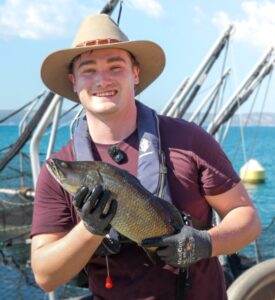
Part 2 – James Sibley: What Happens When Aquaculture Stories Reach Millions
If storytelling pathways allow aquaculture knowledge to travel beyond the sector, digital media determines how far those stories can ultimately reach – and who encounters them first. For many people, platforms such as YouTube, Instagram and TikTok are now the first place they encounter aquaculture.
Through his online channels, aquaculture creator James Sibley brings global audiences directly inside farms, hatcheries and research facilities. His films translate complex farming systems, technologies and research into visual stories that reach millions of viewers and reveal how aquaculture production actually operates. Drawing on filming experiences across countries including Scotland, New Zealand, Australia and The Falklands, this presentation shares practical lessons from bringing aquaculture to large public audiences. It explores where common misconceptions about the sector tend to arise and how complex research and technologies can be explained clearly to wider audiences while maintaining scientific credibility.
These experiences illustrate how communication is becoming an increasingly important part of aquaculture’s development. When research and innovation are translated through formats that people actively engage with, they reach far beyond traditional industry channels – helping the sector become more visible, better understood and better equipped to build long-term public trust.
“Towards Net Zero by 2050 and energy efficient EU aquaculture production”.
Callum Howard, Senior Consultant, MRAG, UK
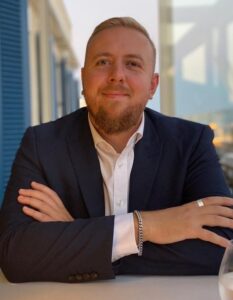
The climate crisis poses fundamental challenges for aquaculture, reshaping not only what, how, and where we farm, but placing the sector under pressure to meet legally mandated greenhouse gas (GHG) emission reduction targets. Meeting these targets demands cross-cutting action across the entire value chain, requiring coordinated efforts from researchers, industry, and policymakers alike.
While viable solutions exist to reduce GHG emissions from aquaculture, achieving widespread adoption remains complex. High investment costs and operational demands present particular difficulties for an industry dominated, at EU level, by SMEs. Other promising solutions remain confined to pilots or research projects due to regulatory and political barriers and inadequate knowledge transfer mechanisms. Low-trophic aquaculture is frequently presented as a panacea and it can deliver genuine environmental benefits, but realising its potential at scale requires overcoming significant barriers related to market development, spatial planning, and regulatory frameworks.
This presentation examines the pathways to achieving net zero in EU aquaculture, drawing on recent European Commission studies on emission reduction costs and pathways, and challenges and opportunities for the implementation of lower trophic production in Europe. It covers recommendations for carbon neutrality pathways as well as discussing policy, regulatory, and economic barriers that must be overcome to enable change.


