
Lipids are essential for fish because they supply energy, support cell structure, and help carry fat-soluble nutrients. This is especially important in carnivorous fish, which use carbohydrates less efficiently than many other animals. Previous studies had already shown that dietary lipid levels influence growth and hepato-intestinal health in juvenile largemouth bass, but little was known about lipid requirements during the larval stage, a period when nutritional precision is especially critical. That gap matters because largemouth bass is a major freshwater aquaculture species in China, yet larval survival remains low. A clearer understanding of lipid needs during early development is therefore necessary to improve survival, support healthy growth, and guide the design of more effective microdiets.
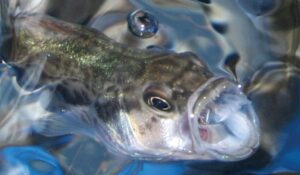
A study (DOI: 10.48130/animadv-0025-0036) published in Animal Advances on 10 March 2026 by Guoxia Wang’s team, Institute of Animal Science, Guangdong Academy of Agricultural Sciences, provides a practical basis for formulating more precise starter feeds for largemouth bass and could help improve larval performance, feed utilization, and large-scale aquaculture productivity.
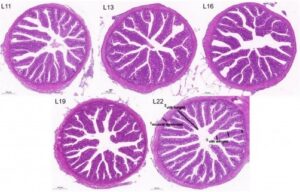
To test lipid requirements, the researchers designed five isonitrogenous, isoenergetic granulated microdiets containing 11.22%, 13.22%, 16.25%, 19.28%, and 22.45% crude lipid. A total of 2,000 larvae with an initial body weight of about 0.06 g were randomly distributed into five treatment groups with four replicates each and reared for 30 days under controlled water quality conditions. The team then measured growth traits, feed conversion, whole-body composition, digestive enzyme activity, liver biochemical and antioxidant indices, and intestinal histology. The results revealed a clear pattern: as dietary lipid increased, final body weight, weight gain rate, and specific growth rate first rose and then fell, with the 19.28% lipid group performing best among treatments. A broken-line analysis estimated the growth-based lipid requirement at 20.16%. Feed conversion ratio declined as lipid increased, showing improved feed efficiency. At the same time, whole-body crude lipid, protein retention, and lipid retention all increased, while moisture declined, indicating more efficient nutrient deposition. Digestive lipase activity was highest in the highest-lipid group, suggesting enhanced lipid digestion capacity under richer fat supply. However, the highest-lipid diet also raised warning signs. Triglyceride and glucose levels first increased and then decreased across treatments, while malondialdehyde, a marker of oxidative stress, was highest in the 22.45% group. Liver-related enzymes also shifted significantly, and quadratic regression based on ALT suggested an optimal lipid level of 16.06% from a liver health perspective. In intestinal observations, the L16 group showed the greatest villus width, and the page-5 histology figure shows intact intestinal structures across groups, with the mid-lipid treatment appearing most favorable for absorptive development. Together, these results suggest that very high lipid intake may support nutrient accumulation but can also impose oxidative and immune-related burdens if maintained too long.
Overall, the study shows that lipid nutrition in largemouth bass larvae must be balanced rather than simply maximized. A diet near 20% lipid appears ideal for promoting rapid growth, but a somewhat lower level near 16% may better protect liver function and long-term health. This work offers a useful nutritional benchmark for larval feed formulation and supports the broader goal of improving precision feeding strategies in carnivorous fish aquaculture.


