
On 27 January in Cebu, 46 young shrimp and tilapiafarmers from the Philippines met peers fromIndonesia and Thailand. The meeting was part of a U.S.Grains & BioProducts Council (USGBC) program toempower the next generation of aquaculture farmersacross Southeast Asia. Perspectives on shrimp farmingin Thailand, Indonesia and the Philippines were coveredin the March/April edition(https://issues.aquaasiapac.com/view/520021778/12/).
In this article, we share insights from three young tilapiafarmers on how they are contributing towards improvingthe strained tilapia industry in Southeast Asia.
•Hector S. AbesandCarlo Enrico A. Latoniofrom thestartup, Kaizen Aquaventure Fishery Inc, discussedchallenges in the Philippines tilapia hatcherysegment.
•Jessica Kaye Turner, Assistant Managing Director,Nam Sai Farms, Thailand, gave a SWOT analysis ofthe Thai tilapia industry; and
•Arnan Hirunratanakorn, Farm Manager, presentedon predictive analysis for tilapia farming at ArnanFarm, Thailand.

Revival in the Philippines: Addressing the tilapia fingerling bottleneck
At the startup, Kaizen Aquaventures, Hector S. Abes and Carlo Enrico A. Latonio aim to address the short supply of fingerlings to revive the tilapia industry in the Philippines.
Beginning with the state of the industry and their role in improving its future, Hector said that the Philippine tilapia industry may have demonstrated remarkable resilience, but it continues to face significant structural challenges.
The Philippine tilapia industry consists of approximately 725 hatchery farms, around 75,851 grow-out farms, 48 feed millers and 15 dedicated fish food processors. These are heavily concentrated in a few regions.
Production dropped during the pandemic (2020);however, after COVID-19, the government supported the industry through programs and increased production to almost 280,000 tonnes. Consequently, in 2022, several typhoons and flooding caused a dramatic reduction in production and rising costs due to the Russia-Ukraine conflict, leading to the slow growth of the industry in2023–2024. Production in 2024 was around 260,000tonnes.
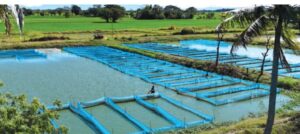
Heavily concentrated in Central Luzon
Approximately 66% to 70% of the national tilapia production comes from central Luzon, where many hatcheries are also located. While this concentration creates efficiencies in logistics, transportation and supply chain management, it also creates significant risks. When climate events, disease outbreaks or supply disruptions occur in these key production areas, the effects are felt throughout the entire national tilapia supply chain.
According to the Philippines Statistics Authority (PSA),based on per capita fish consumption, the country will require approximately 325,000 tonnes of tilapia by 2025,which will need an estimated 2.7 billion tilapia fingerlings. Hector argues the gap between fingerling supply and industry demand is enormous, as the country currently produces only around 300 million tilapia fingerlings annually.
“Conversations with farmers across the country reveal that farmers repeatedly face inconsistent fingerling quality, uneven growth rates, high mortality and longer culture cycles.” He added, “Tilapia farming can feel like a gamble—sometimes yielding strong returns, and at other times, causing them to miss production cycles.”

“Conversations with farmers across the country reveal that farmers repeatedly face inconsistent fingerling quality, uneven growth rates, high mortality and longer culture cycles,”
says Hector S. Abes, CEO, Kaizen Aqua ventures, Philippines.
Traditional practices and structural challenges
“The real bottleneck is not ponds but fingerlings,” said Hector. Many hatcheries still rely on traditional methods, often lacking biosecurity measures, conditioning ponds and proper management practices. While other countries have moved towards modern systems such as hapa-based production and artificial incubation, the Philippine hatchery practices remain largely conventional. Some government-funded hatcherie shave better infrastructure and facilities, but operation soften cease when funding ends. In addition, fingerlings are frequently distributed free of charge, undermining nearby private hatcheries and distorting local markets.
Focus on underserved farmers
Kaizen Aqua ventures focuses on serving underserved farmers who need reliable, high-quality fingerlings and ongoing technical support. Established in 2024,they currently operate a 3ha hatchery farm. They are accredited by the Bureau of Fisheries and Aquatic Resources (BFAR), allowing them to supply fingerlings to government programs. The company currently participates in projects in Regions I and III, is a member of the Philippine Tilapia Commodity Board, and collaborates with fisherfolk associations through out the country. Kaizen actively seeks out smaller fisherfolk organisations in underserved provinces and supplies them with quality fingerlings to improve local tilapia production.
Fingerlings are delivered even to remote locations, including isolated communities accessible only through challenging transportation routes, sometimes crossing mountainous terrain using tramline systems. Some10-15% of the production is supplied to poor farmers. Through access to quality fingerlings, technical training, and government assistance, many of these groups have regained confidence in fish farming.
Investing in the next generation Kaizen Aquaventures is not only focused on business; it also recognises the urgent need to renew an ageing aquaculture workforce, with fish farmers averaging about 58 years old. To help secure the industry’s future, the company actively recruits and trains young people for careers in aquaculture. As a bootstrapped startup, Kaizen lacks access to the costly commercial artificial incubation systems used by larger hatcheries. Instead,i ts team developed a low-cost artificial incubator after studying systems in Thailand and Brazil and reviewing available YouTube videos. The company plans to expand its hatchery to 9ha within the next year. It is also forging partnerships with local universities and international organisations to advance research in genetics, water quality management and hatchery innovation.
Producing disease resistant monosex tilapia fry
Jessica Kaye Turner believes there is significant potential for increasing tilapia production in Thailand. Nam Sai Farms addresses the challenges by taking an active role in the advanced hatchery, fry production and distribution network.
Thailand remains one of the world’s leading tilapia producers, although competition within Asia is intensifying. Thailand ranked sixth with 266,000 tonnes, but was overtaken by Vietnam in 2024, which produced316,000 tonnes. Despite this increasingly competitive land scape, Thailand’s tilapia industry continues to benefit from its strengths: decades of technical expertise, a favourable tropical climate that supports year-round production, strong domestic demand, and an advanced hatchery and fry distribution network driven largely by private sector investment. However, only about 2.6% of national production is exported, reflecting both strong local consumption and challenges in meeting export market requirements. Production continues to increase, although the rate of growth is slow, while farmgate prices have stayed relatively stable at approximately USD 1.5/kg for Nile tilapia and USD 2.6/kg for 1.0–1.5 kg red tilapia.
Off flavour hinders exports In terms of weaknesses, Jessica noted that since tilapia production in Thailand is dominated by earthen pond farming, a major hurdle is off-flavour or muddy taste. This is caused by compounds such as geos min and 2methylisoborneol (MIB), both produced by specific microorganisms in freshwater green water systems. This remains a major obstacle to export its tilapia. Highfeed costs continue to constrain profitability, particularly for cage culture operators who rely almost entirely oncommercial feeds. Disease outbreaks, water pollution and flash floods pose additional risks, especially in openwater cage systems where biosecurity and water quality control are difficult to maintain. Jessica views tilapia feedprices, which are nearly 30% higher than those in Vietnam, as a disadvantage for the industry.
“Farmers are very adept in farming, but many farmers lack expertise in marketing and product development. They face pricing pressure from middlemen, who often capture a disproportionate share of the value chain, leaving producers with thin margins and limited bargaining power,” said Jessica.
There are opportunities for Thailand. It already has a global position as a supplier of tilapia seed. Although annual exports of tilapia products total only around7,000 tonnes, Thailand exports significant volumes off ry to markets including Vietnam, Malaysia, Saudi Arabia, Ghana and Jordan. The annual export volume is estimated to exceed 100 million fry from hatcheries in Thailand. Jessica says another opportunity lies in farming tilapia infertilised green brackish waters, which can eliminate off-flavour and potentially open access to export markets.
Survival over rapid growth Nam Sai Farms established 32 years ago, specialisesin male monosex and red tilapia fry production. While growth rate and body shape are important traits, the hatchery prioritises disease resistance above all else. Fast growing fish are of little value if survival rates are poor. “The goal is to produce fry capable of thriving under real farming conditions,” noted Jessica.
Exposing fish to natural challenges Rather than raising broodstock in highly controlled environments, the hatchery uses earthen ponds that closely resemble the conditions experienced by farmers. Fish are exposed to natural challenges, including changing weather, phytoplankton rich water and naturally occurring pathogens. Jessica argues that with this approach, they do not push for biosecurity but encourages natural selection, allowing the strongest fish to survive and pass their traits to future generations.
Broodstock are ready for egg collection at around six months of age and weigh 80–100g. Eggs are collected every six days, with each female producing between 500and 2,000 eggs per spawning cycle. After collection, eggs are sorted by developmental stage, which are 24 hours apart and disinfected with potassium permanganate and incubated in systems designed to mimic maternal mouth brooding.
Once the fry reach the swim up stage, they are transferred to a sex reversal nursery for approximately21 days, or up to 25 days during cooler months. Fry are fed intensively and graded by size before sale at0.25g. Any undersized fish remain in the nursery for an additional week before being graded by size again. Quality control is rigorous. Samples from every batch are reared to 5–10g and examined microscopically to verify that male populations exceed 99%. Automation further improves efficiency, with modern counting and packing systems capable of processing up to 300 bags of fry per hour while reducing handling stress and human error.
Turning past “patterns” into future predictions
Arnan Hirunratanakorn believes that a data driven farm management approach based on predictive analysis is the right path to profitability.
Most problems don’t just happen. They usually leave signs before they occur.” For Arnan Hirunratanakorn, Farm Manager at Arnan Farm in Thailand, predictive analysis means examining historical and current data to identify patterns that indicate future outcomes. The approach is simple: collect data, identify patterns, and use them to make better decisions before problems arise. “Like the weather forecasts, this is still not perfect, but it is better than just guessing,” said Arnan. All over Southeast Asia, common issues revolve around, from biological- biomass in the pond and mass mortality to physical, such as uncontrollable water quality and electricity breakdowns.
A farm built on data
Established in 1991, Arnan’s family farm has accumulated more than three decades of production records. The 50ha polyculture operation holds multiple certifications and serves as a learning centre for aquaculture management and production. Despite this, the farm remains largely traditional rather than high tech.
The farm records production data including stocking, growth, size sampling, mortality, harvests and size distribution. It also tracks feed inputs, lime, fertilisers and minerals. Water quality records include pH, alkalinity, ammonia, dissolved oxygen, and day and night temperatures. Unusual events such as weather changes, disease outbreaks and mortality incidents are also documented, often providing valuable clues when analysing patterns. Data collection is traditional but consistent
Most records are still collected on paper. Daily logs include feed usage, water applications, fertiliser inputs, harvests and production activities. At the end of eachyear, the data is digitised, allowing the farm to identify trends, develop formulas and build predictive models.
Predicting pond biomass
Estimating tilapia biomass is a common challenge. Arnan shared how his methods allowed him to predict biomass for every kg of feed. Historical records showed a relationship between the final daily feed input before fasting and eventual harvest weight. Fish are starved before harvesting.
Identifying a hidden mortality problem
Arnan explained that one pond consistently experienced daily loss leading to an annual mortality ranging from 3,000 to 12,000 fish, while other ponds under the same management did not. Investigations revealed highly acidic soil, low mineral content, low pH, low alkalinity and poor water quality. These conditions were unsuitable for both tilapia and phytoplankton production. Regular fertiliser applications were introduced to raise pH, increase alkalinity and stabilise water quality. The recurring mortality pattern disappeared and has not returned. Arnan added, “I would not know if we have not been consistently recording data
Predicting crop profitability
A typical crop lasts around eight months.
“Yet, my father can often predict profitability after only two months by recognising patterns repeatedly observed in previousproduction cycles. As more data accumulates, predictivemodels become increasingly sophisticated.”
Applications include forecasting stocking needs, oxygen trends, aeration requirements and production levels. Long-term dissolved oxygen records help determine when aerators should be activated, reducing energy costs while improving efficiency and growing conditions. The farm also uses external data from the government’s website giving information on the river conditions, since it depends on this water resource; for example, forecasts for January and February help the farm prepare for the rainy season.
The limits of predictive analysis
Predictive analysis supports decision making but does not replace human judgment. No single model works for every farm, as species, feeds, management practices, climate and water conditions differ.
“Today, we talk about AI and smart farms, and several predictive models are available for farmers to input. The accuracy of predictions ultimately depends on data quality. The more consistently and accurately data is collected, the more reliable the results become”.


