
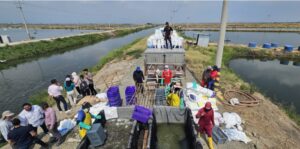
The world’s shrimp industry has long been defined by a simple equation: produce more, produce faster and produce cheaper. Recently, a group of Southeast Asian shrimp and tilapia farmers and aquafeed producers challenged that assumption after US Grains and BioProducts Council (USGBC) sponsored a visit to Ecuador, the world’s leading shrimp producer and
exporter. Their goal was to learn more about how Ecuador has achieved its global dominance in shrimp production
through a model built on scale, integration, biological selection and disciplined optimisation.
For many in the Southeast Asian shrimp industry, accustomed to high density farming, Ecuador’s approach appeared almost counterintuitive. Its ponds are larger, stocking densities are lower and margins at farm level appear modest. However, the system works because Ecuadorian companies have aligned production methods with their geography, infrastructure and market structure. The trip raised a central question for Southeast Asia. Should the future of shrimp farming be about producing more shrimp from every hectare, or about producing more consistently and efficiently from the resources available?
Co-operative integration: The power of working as one industry
One of the strongest impressions from the visit was Ecuador’s level of integration across the shrimp value chain. Several participants argued that Ecuador’s competitive advantage comes less from any single farming technique and more from the way the industry is organised.
Khemika Klomsuwan, Shrimp Aquaculture & Strategic Manager, Krabi Kieng Seng – Kitcharoen Farm, Thailand highlighted that Ecuador’s success was built on a cooperative model where farms, feed companies, hatcheries and processors operate in close alignment. Unlike much of Southeast Asia, where farms, feed suppliers and processors often operate as separate businesses, Ecuador’s largest players frequently control multiple stages of production.

According to Khemika, Ecuadorian companies have sustained investment in technology adoption and have developed their own genetic programs rather than relying heavily on imported broodstock. This gives producers greater control over biological performance and reduces dependency on external suppliers.

Yanisa Klomsuwan, Shrimp Aquaculture & Strategic Manager, Krabi Kieng Seng – Kitcharoen Farm, Thailand made a similar observation.
“They have vertical integration so that’s why they produce at a very low cost compared to us. In Thailand, we are separate in each segment: farm, feed and processing.”
Around 60% of Ecuador’s shrimp production is from 10 major players, many of which own processing facilities. While farms may appear to generate limited profits, the integrated companies capture value further downstream.
She argued that this structure makes Ecuador difficult for Southeast Asian farmers to compete against. In Asia, farming, feed production and processing are often fragmented, meaning profits are distributed across different businesses rather than captured within a single integrated operation.
Caleb Wurth, Regional Director for Southeast Asia and Oceania, USGBC, added that Ecuador’s industry association, the National Aquaculture Chamber (CNA), has played an important role in strengthening collective action. Unlike a government agency, the organisation represents producers and helps coordinate industry priorities, negotiate and promote Ecuadorian shrimp internationally. For Caleb, the lesson was not simply about farming technology but about industry organisation. Southeast Asia may need stronger producer collaboration if it wants to compete globally.
Land size drives economies of scale
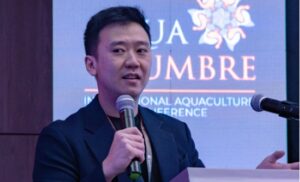
Perhaps the most obvious difference between Ecuador and Southeast Asia is land availability. Rizky Darmawan, CEO, Delta Marine Group, Indonesia described Ecuador’s farming model as “traditional” compared with Asian systems but emphasised that Ecuadorian farms operate on a completely different scale. Individual farms commonly span hundreds of hectares, compared with the much smaller operations typical across Asia.
This changes the economics of shrimp farming. Ecuadorian farmers may only earn margins of US 5–15 cents per kilogram, but they produce across enormous areas and maintain relatively consistent harvests. The business resembles other commodity industries where low margins can still generate attractive returns through volume.
Caleb reinforced this point, noting that Ecuador has abundant land with limited alternative uses. In densely populated Asian countries, land has far higher opportunity costs. A large parcel of land in Indonesia, Thailand or Vietnam may be more valuable for industrial development, housing or agriculture than shrimp ponds. In Ecuador, however, shrimp farming represents one of the country’s most productive uses of coastal land. “It’s economies of scale from small margins with large farms.”
Amorn Luengnaruemitchai, Managing Director, Manit Genetics, Thailand agreed that scale is central toEcuador’s advantage. Even with low margins, production volumes allow companies to generate meaningful returns. He described Ecuador’s strategy as waiting for additional profitability over time rather than chasing maximum margins immediately.
Preecha Ekatumasuit, CEO, TRF Feed Mill Co Ltd, Thailand also highlighted the contrast between Ecuador’s industrial
model and Southeast Asia’s fragmented structure. A large Ecuadorian operation can harvest consistently across thousands of hectares, while Asian farmers often face greater variability caused by disease, survival rates and environmental challenges.
Low density, high consistency: A different philosophy of farming
The most surprising lesson for many visitors was that Ecuador has achieved global success while maintaining relatively low stocking densities. Ecuadorian farms typically stock less than 20 PL/m2, compared with many Southeast Asian farms that stock 100–200 PL/m2.
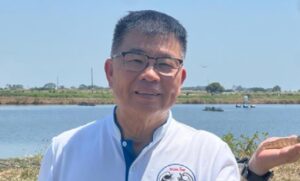
Preecha argued that this difference reflects two fundamentally different philosophies. Southeast Asia has historically pursued productivity through intensity: more shrimp per pond, more production per hectare and higher potential returns. Ecuador has focused instead on consistency and risk reduction.
Rizky added,
“They have five or six cycles a year. They might have two good cycles. They can still make money. If they lose or win at each cycle, they do so at a small margin, but at the end of the year the aggregate is good enough for them.”
He described Asian shrimp farming as sometimes resembling a gamble, where farmers accept greater risks in pursuit of higher returns. Ecuadorian producers, by contrast, have built a system designed around predictable outcomes.
Yanisa noted that lower densities reduce stress and disease pressure. During the visit, Ecuadorian farms showed strong survival rates, which may partly explain their lower production costs.
However, Amorn cautioned that Ecuador’s current model may face challenges if producers increase stocking densities too aggressively. He pointed to Thailand’s experience, where intensification initially created growth but eventually led to disease and environmental problems.
“I’m quite sure in the future, they will increase the stocking density. When they start to increase the number of shrimp/ m2 sooner or later, they will face the same problems as Asia”
For Amorn, Ecuador’s challenge will be maintaining discipline. The same factors that made the industry successful, low density, biological control and stable production could be undermined if the industry pursues growth without restraint.
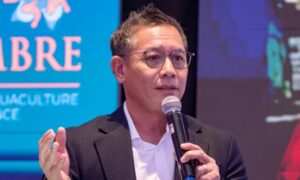
Technology adoption: Optimising rather than maximising
Although Ecuador’s farming model appears extensive, participants were struck by how advanced its operational technology has become.
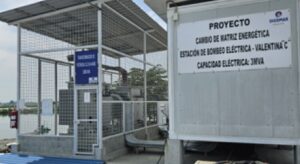
Amorn argued that Ecuador’s success does not come from using the most advanced technology available, but from using technology effectively. Automatic feeders, shrimp pumps, acoustic feeding systems and mechanised harvesting allow farms to operate efficiently despite their lower densities. Lower electrical costs, stemming from a hybrid system of hydroelectric and diesel supplies also helps.
Hendri Inarto, Senior Nutritional Research and Technical Specialist, PT Suri Tani Pemuka, highlighted the widespread adoption of automated feeding systems such as AQ1 technology. These systems help reduce feed waste, improve feed conversion ratios and allow farms to manage production with fewer workers. Khemika added, “There were very few workers when I was visiting. I think that makes Ecuador different from our farms.”
Preecha also pointed to Ecuador’s use of artificial intelligence and monitoring tools, contrasting this with Southeast Asia, where many farms are only beginning to adopt similar systems.
However, Rizky noted that not every technology can be directly transferred. Some automated feeding systems tested in Asia had struggled under higher density farming conditions. The broader lesson, participants concluded, was not simply to copy Ecuadorian technology but to understand why and where it works.
Jessica Kaye Turner, Assistant Managing Director, Nam Sai Farms, Thailand, emphasised that Ecuador’s success
has also been supported by widespread adoption of extruded feeds contrasting with Asian markets where pelleted feeds remain dominant. Extruded feeds undergo mechanical and thermal processing that enhances digestibility, improves nutrient availability and water stability by reducing nutrient leaching.
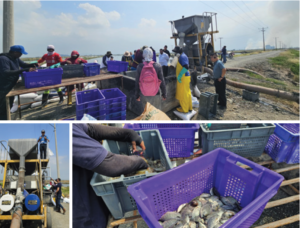
“This allows the shrimp to receive more consistent nutrition white maintaining better water quality and improving feed conversion efficiency. They don’t rely on binders, therefore providing more flexibility in formulation.”

However, Jessica reports that the acoustic sensors could not “hear” the shrimp chewing extruded feed due to its high
porosity. So, the engineers adjusted feed density, modified extruder dies and developed highly sensitive desiccant technologies to restore friction and sound.
Genetics: Building a local advantage
Genetics emerged as another major factor behind Ecuador’s success. Amorn explained that Ecuadorian producers have developed collaborative breeding programs where multiple farms contribute their strongest performing shrimp to shared genetic selection programs. The surviving animals become the foundation for future generations.
This creates a low cost but highly effective selection system because shrimp are tested under real commercial farming conditions.
Khemika similarly highlighted Ecuador’s independence in genetic development. Unlike many Asian producers that rely on imported broodstock, Ecuador has developed its own genetic base suited to local farming conditions.
The group also discussed Ecuador’s local, non‑SPF (specific pathogen free), non‑SPR (specific pathogen resistant) genetic lines compared with the SPF approaches more common elsewhere. The question remains whether Ecuador’s genetics would perform under Asian high-density conditions. Preecha questioned whether Ecuadorian broodstock could maintain performance if exposed to much higher stocking pressures.
Jessica emphasised that while Asian farms have historically relied on SPF genetics, small ponds, high stocking densities, enclosed HDPE systems, and strict pathogen exclusion, Ecuador has developed a large scale, semi-intensive model using all pathogen exposed (APE) genetics selected for performance under real farm conditions. This approach combines lower
stocking densities, larger ponds, natural ecosystem integration, water recirculation and bioremediation to improve robustness against disease challenges. Preecha questioned whether Ecuadorian broodstock could maintain performance if exposed to much higher stocking pressures.
The value chain problem: Farmers versus processors
Despite Ecuador’s success, several participants raised concerns about how value is distributed. Rizky argued that farmers may be the weakest link in Ecuador’s shrimp ecosystem. Although shrimp production is profitable, farm level margins remain extremely low. Rizky said,
“So I think if the Asian farmers’ profits are as low as Ecuador’s, I think the farmers will just close down their farm and maybe grow something else. With the amount of risks against the amount of profits I don’t think it makes sense”
Rizky suggested that processors and exporters capturemuch of the additional value, particularly when shrimp is processed for premium markets such as the U.S. Farmers remain tied to global commodity pricing, particularly Chinese demand, which sets a benchmark for raw shrimp prices.
Christopher G. Co, Chief Operating Officer at Oversea Feeds, Philippines observed a similar contradiction after visiting Costco supermarket in the U.S. Ecuadorian shrimp sold at a 20–30% lower price than Vietnamese shrimp despite strong quality and consumer acceptance.
He questioned why Ecuadorian farmers accept such low margins when their product appears capable of achieving higher prices. Rizky’s explanation was that farmers often cannot capture this premium because processors control market access and value-added opportunities.
The takeaway for Southeast Asia
The final message from the group was not that Southeast Asia should copy Ecuador. Rather, Ecuador demonstrates that successful shrimp farming depends on finding the right model for each environment.
Rizky argued that there is no single way to farm shrimp. In regions where high density farming creates repeated failures, adopting a lower density approach could provide more stable returns.
Extracted from a linkedin post by Jessica Kaye Turner on her Ecuadorian experience: https://acesse.one/jjaf82l
Yanisa agreed, noting that every geography has different limitations. Southeast Asia’s land scarcity makes high density farming understandable, but producers should focus on sustainability rather than simply matching Ecuador’s production model.
“However, we are very interested in how they do water exchange through gravity. We might need a lot of infrastructure investment for that. We’ve been designing that with our farm manager.”
Chewen Wei, Export Director, Uni-President Vietnam offered a different perspective: Southeast Asia may not win through lower costs. Instead, producers should focus on increasing value, improving branding and accessing higher value markets.
Preecha concluded that shrimp is increasingly becoming a commodity industry, similar to poultry. Southeast Asia may struggle to compete with Ecuador purely on cost, but it retains advantages in processing expertise, product quality and market relationships.
Kemika said,
“For us we will be trying to reduce our farmdensity so that we can deal with organic matter in the pond. If there’s one takeaway for me, it’s dropping the down a little bit.”
Chodpipat Limlertwatee, Chief Farming Officer at L.K. Group, Thailand, added,
“We can copy its sequencing: choose the animal that suits the place, expand in a way the resource can carry, and build the collective structures that let producers speak with one voice. Technology and density are decisions that come after those, not instead of them.”
Caleb ended the discussion with optimism. Ecuador’s success should not discourage Southeast Asia but motivate it. The ability of producers from different countries to share knowledge, challenge assumptions and adapt will ultimately determine the industry’s future.
Ecuador’s lesson is not that bigger is always better. It is that success comes from understanding one’s environment and optimising every part of the system accordingly.


