
Led by Professor Chu-Fang Lo, ICSDSA marks a decade of progress towards supplying biosecure SPF broodstock and commercialising its farming.
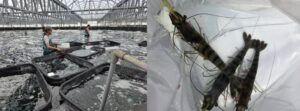
This year, the International Centre for the Scientific Development of Shrimp Aquaculture (ICSDSA) at the An-Nan campus of National Cheng Kung University (NCKU) celebrates its 10th anniversary. Founder, Professor Grace Chu-Fang Lo has announced a milestone; since 2025, the centre has begun to offer specific pathogen free (SPF) Penaeus monodon broodstock to international markets.
Now retired, Lo serves as an adviser to the centre, while Professor KC Han-Ching Wang succeeded her as director in 2020 and now leads the centre as its principal investigator.
Today, ICSDSA operates a 0.5ha nucleus breeding centre (NBC) in Tainan and a 3ha broodstock multiplication centre (BMC) in Hualien, together with two WOAH (World Organisation for Animal Health) designated reference laboratories for shrimp diseases —for white spot disease (WSD) and acute hepatopancreatic necrosis disease (AHPND) and two research laboratories. The centre has six research scientists, supported by an aquaculture team of 10 staff and an R&D team of 10 graduate students.
From research to production
In 2024, ICSDSA completed elite breeding across 12 families. Its 2025 partnership with Brunei’s Golden Corporation advanced commercialisation: the company now distributes broodstock globally and operates a broodstock multiplication centre (BMC) outside Taiwan. SPF broodstock exported to Brunei have since produced offspring that performed well in commercial trials, showing encouraging growth and production.
“Beyond supplying SPF broodstock, our work supports the next generation of shrimp farmers and advances sustainable aquaculture,”
said Lo.
From 2026 to 2028, in addition to continuing to pursue cutting-edge research on shrimp and their pathogens, Lo and Wang plan to advance AI-driven shrimp aquaculture, develop zero-carbon farming, and expand the global market for SPF P. monodon broodstock.
This marks an important transition of the ICSDSA breeding program from research and genetic conservation towards international commercial application.
“Our ambition is to make Taiwan the global hub for SPF P. monodon broodstock and to emphasise on international collaboration in breeding and farming, SPF post larvae from the centre have already supported production at our farm. In 2024, this output represented 0.4% of Taiwan’s total P. monodon production.”
said Lo.
In 2013, Lo intiated this nuclues breeding program and by 1026, built Taiwan’s only SPF P.monodon breeding centre. In 1027, Lo had said “My goal extends beyond domesticating P.monodon: I want to revive black tiger shrimp farming. Although farmers have favoured Panaues vannamei over our native black tiger shrimp, the species remain close to my heart. i am delighted that Taiwan can now supply its broodstock to international markets”
Specific pathogen free broodstock
Specific pathogen free broodstock “P. monodon has made a strong comeback in the market recent years, with demand continuing to grow. farms are therefore seeking addtional reliable sources SPF P.monodon, said Wang
“We have invested nearly a decade in the breeding and development of SPF P.monodon, and we can now supply PSF broodstock that has been tested fee from nine major shrimp pathogens or disease-associated agents”
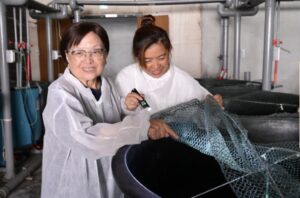
These include WSD, Decapod iridescent virus 1 (DIV1), Taura syndrome virus (TSV), yellow head virus genotype 1 (YHV1), infectious hypodermal and haematopoietic necrosis virus (IHHNV), infectious myonecrosis virus (IMNV), Enterocytozoon hepatopenaei (EHP), the pathogen associated with AHPND, and necrotising hepatopancreatitis (NHP).
Biosecure pathway: From wild founder stock to NBC
At the centre, the SPF program starts with a primary quarantine process, during which wild-caught founder stocks undergo comprehensive pathogen screening. Important shrimp pathogens are continuously evaluated, with new and emerging pathogens added to the screening list when necessary.
The two WOAH reference laboratories, both led by Wang, provide diagnostic support for routine pathogen screening throughout the SPF program. Wild-caught founder broodstock (F0) confirmed free of the targeted pathogens enter a secondary quarantine facility to produce the F1 generation. When both the F0 broodstock and their F1 post larvae are confirmed free of these pathogens, the F1 generation can enter the nucleus breeding centre (NBC),” explained Wang.
Broodstock diets comprise mainly SPF polychaetes from the Netherlands and locally sourced squid that has also been tested and confirmed free of the targeted shrimp pathogens.
Selection for robustness and fast growth
The breeding program begins with a simple but effective selection process focusing on robustness and growth. Each batch produced by each family is reared separately to maintain clear family identity. During the early developmental stages, from nauplius to PL7, 50,000 to 100,000 larvae are reared in 1-tonne tanks with a water volume of 600–800L, providing an early selection pressure for robustness under intensive rearing conditions.
After PL7, the shrimp are transferred to 0.5-tonne tanks with 300–400L water, where approximately 500–1,000 juveniles are reared under relatively high-density conditions. Individuals that survive and perform well under these conditions are retained. As the shrimp grow into larger juveniles and subadults, selection increasingly focuses on growth performance. Faster-growing individuals within each family are selected and retained for subsequent breeding.
“In this way, we aim to maintain robust individuals during the early stages while progressively selecting for superior growth within each family.”
explained Wang.
The team believes that selecting for robustness, in addition to growth, is important for developing broodstock that can produce offspring with better performance and survival under farming conditions.
“Once sufficient post larvae are available and promising families have been identified, we conduct additional evaluations, including tolerance to low salinity and resilience to disease challenges. Through this process, we aim to develop broodstock that combines fast growth with greater robustness,”
added Lo.
However, Wang clarified, “We prefer not to describe these shrimp as ‘disease-resistant,’ as the term may imply a level of protection that has not been fully established across different pathogens and farming conditions. Instead, we focus on evaluating their robustness and performance under specific environmental and disease challenges.”
Reproductive performance is important
While selection focuses on robustness and fast growth, reproductive performance is also an important trait that is continuously monitored. The selected broodstock generally reach around 100g for females and 80g for males.
“Even when broodstock are selected from a promising family, we continue to evaluate their reproductive performance, including fecundity and integrate this information into our selection. Today, our female broodstock produce on average 500,000 eggs/spawning, while some families can reach up to 750,000 eggs/spawning. Each female can also spawn several times. The reproductive and growth performance of selected families is then further evaluated and confirmed in the next generation,”
added Lo.
Family-line management at the NBC
The 0.5-ha NBC was established in 2016, marking the start of the P. monodon domestication and breeding program using founder stocks collected from waters around Taiwan. Successful domestication was achieved the following year.
“We started with 18 families and, over the years, reduced the number to 14. More recently, we decided to focus on 12 family lines, The centre is fully publicly funded, and we operate with limited space and staff. We do not routinely measure genetic diversity, as this would require additional resources and manpower. We therefore have to be selective and focus our resources on the priorities that are most important for our breeding program, both now and in the future.”
stressed Lo.
Broodstock handling and maturation checks
In the biosecure broodstock conditioning and maturation area, each circular 50-tonne tank containing 30 tonnes of water, holds fewer than 15 pairs from the same family line. The shrimp have been maintained as a family group for more than one month while staff continue to monitor their progress. Staff clean the tank and remove leftover material or debris as part of routine maintenance. The family is usually kept for the first and second spawning cycles before being removed from the tank. Spawning is carried out in another series of tanks.
Assessment of ovarian maturation
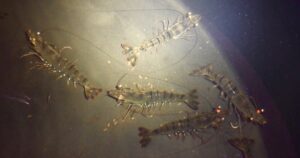
In monitoring ovarian maturation under the dark conditions required for broodstock, underwater cameras are used to observe the shrimp with minimal disturbance. In collaboration with Taiwan-based Microprogram Information Co., Ltd., ICSDSA has established an imaging platform that links underwater images of individual broodstock with their corresponding ovarian maturation stages. This allows staff to continuously record and review changes in ovarian development without frequently handling or disturbing the animals.
Since 2024, the platform is now being further developed toward AI-assisted, real-time assessment of ovarian maturation.
“We have accumulated longitudinal image records of ovarian development for individual broodstock across different families. Our next step is not only to improve the accuracy of real-time maturation assessment, but also to integrate individual broodstock information, such as moulting and spawning cycles, as well as family-specific traits, Ultimately, we hope to develop models that can predict ovarian maturation and spawning readiness.”
said Wang.
“As a broodstock provider, we recognise that different families perform differently under different conditions. Our goal is therefore to characterise each family and understand its strengths.”
said Wang.
Characterising best performing families
“A major bottleneck in aquaculture is how to translate practical farming experience and know-how into measurable and usable data. As a broodstock provider, we recognise that different families perform differently under different conditions. Our goal is therefore to characterise each family and understand its strengths. By integrating AI-tracked growth and phenotypic data from both female and male shrimp with family and environmental information, we aim to understand which families perform best, where, and under which conditions. Over time, this will help us make better breeding decisions and provide broodstock better suited to different farming environments,”
said Wang.
Water circulation and lighting conditions
Maintaining the correct water quality and temperature is critical. The NBC uses a smart IoT system to monitor five parameters hourly: temperature, dissolved oxygen, salinity, oxidation–reduction potential (ORP) and pH. Seawater from each pump is routed through the system at regular intervals, and freshwater is added to maintain tank salinity at 35ppt. An alarm alerts staff whenever a parameter falls outside its acceptable range.
Dark conditions are important for broodstock maturation because they help reduce inhibitory neuroendocrine signals associated with the eyestalk X-organ. However, working in darkness is inconvenient and potentially unsafe for staff, while sudden exposure to normal light can startle the shrimp and affect reproductive performance.
The late Professor Chung-Hsiung Wang, a retired entomologist from National Taiwan University noted that many insects are less responsive to certain longer wavelengths of light, while the light remains visible to humans. Since shrimp and insects are both arthropods, he proposed applying the same concept to shrimp. The centre therefore adopted low-intensity yellow lighting, allowing staff to work safely while minimising visual disturbance to the broodstock.
Monitoring biomass, growth and deformities
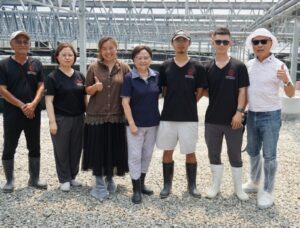
Both Lo and Wang credit the contributions of 35 collaborators from the private sector and academic institutions across Taiwan and abroad. These collaborations cover scientific research in shrimp disease control and breeding, as well as the development of innovative monitoring technologies that help reduce carbon footprint, optimise resource use and limit subjective assessments. One example is the use of camera systems to continuously monitor shrimp development at both the NBC and BMC.
At the NBC, clear quality standards are maintained for each family.
“We recently decided to discontinue one family because of consistently poor larval performance. The decision followed recurring larval deformities observed in batches produced by different females from the same family,”
explained Wang.
Objective and data-driven decisions
To make such observations and selection decisions more objective and data-driven, the centre has recently begun collaborating with Professor Ing-Jer Huang of National Sun Yat-sen University to develop an AI-assisted system for larval assessment. The system is being developed to assess larval activity, quantity and deformities, providing intelligent decision support for family selection.
At the BMC, another camera-based monitoring system developed by Huang’s team is used to track body size, growth trends and gut fullness, providing valuable phenotypic data for both farming management and breeding. By integrating this system with AI-based image analysis, in collaboration with Professor Chien-Kang Huang of National Taiwan University and Professor Tien-Hsiung Weng of Providence University, the phenotypic data can be further linked with family and environmental information to understand how different families perform under different conditions.
Broodstock multiplication centre at Hualien
Within the NBC, selected individuals with desirable traits from each family are retained as broodstock to produce the next generation. The remaining SPF post larvae from each family are transferred to the BMC in Hualien for large-scale grow-out to broodstock size. Among these, selected individuals with superior traits may be returned to the NBC for further breeding only after screening confirms that they remain SPF and are free of the targeted major shrimp pathogens. The remaining SPF broodstock are available for commercial use.
The highly biosecure 3ha indoor BMC in Hualien supports large-scale SPF broodstock production. It contains 14 circular tanks, each with a capacity of 500 tonnes, as well as six smaller 50-tonne fibre-reinforced plastic tanks. Designed to retain heat, the facility recorded a tank-water temperature of 31.6°C during the visit in early July. compared with 35°C indoors and 37.2°C outside. Four staff manage the facility: Dr Nai-Yueh Tien, Cheng-Yu Sang, Cheng-An Hsieh and Meng-Chieh Yeh.
“Hualien is primarily an agricultural region with relatively little shrimp aquaculture activity. That is the reason we chose to locate the BMC here, The Hualien centre is expected to have the capacity to produce at least 3000 P. monodon broodstock annually. It also serves as the hub for SPF broodstock packaging and export.
High-density rearing to selected broodstock
Post larvae from the NBC are initially stocked at high density in BMC tanks and progressively thinned as they grow, ensuring sufficient space to reach broodstock size. Each tank holds shrimp from a single family. Wang confirmed that families are never mixed.
“The post larvae transferred to Hualien are already robust individuals that have survived the high-density rearing conditions at the NBC. With more space available at the Hualien facility, they can continue to grow well,” said Lo.
Once the shrimp reach broodstock size, those displaying desirable traits, including superior body size and attractive pigmentation, are selected as broodstock candidates.
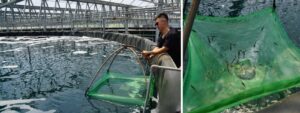
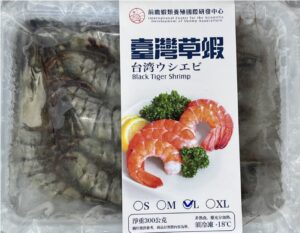
For example, one 500-tonne BMC tank was initially stocked with more than 20,000 PL7–PL10 post larvae. As the shrimp grew, the stock was thinned to reduce density and provide sufficient space for further growth. They were eventually reared at approximately 5–15 shrimp/m² until reaching broodstock size after about 10–12 months. The partial-harvest shrimp (30g ~ 100g ) are marketed as high-quality products.
Hatchery and farm performance in Brunei
At the end of December 2025, Lo supplied SPF P. monodon broodstock to Golden Corporation, Brunei’s fully integrated seafood producer, which operates 600 ponds, shrimp and fish hatcheries, a feed mill and processing plants. She was encouraged by both the hatchery performance of the broodstock and the subsequent grow-out results from 50 ponds.
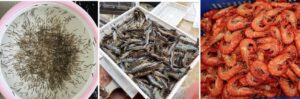
“Managing Director Richard Chuang reported that the broodstock produced large quantities of healthy post larvae. Fecundity exceeded 500,000 eggs/spawning, with a hatching rate of around 80%. Production was so high that the hatchery had surplus post larvae. He also reported that the broodstock matured well without eyestalk ablation,”
said Lo.
Lo added that the results from partial harvests from grow-out ponds in Brunei were 32g shrimp in 116 days with high survival rate. The stocking density was 31 PL/m2 .
“Shrimp had a beautiful colour and were uniform in size. The farm reported an FCR of 1.4 using feed imported from Vietnam.”
Taiwan’s hub-and-satellite model for P. monodon broodstock
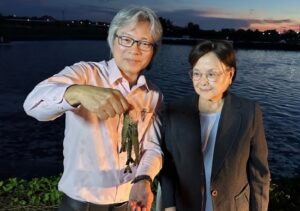
“Our role remains centred mainly on research and education, but we have now expanded into broodstock production and international supply. In 2013, we told the research committee that breeding would be a critical component of food resilience. We believed it was important for Taiwan to establish its own P. monodon breeding program, with Taiwan serving as the hub and satellite centres supporting broodstock production and supply to international markets. We are delighted to see that vision now becoming a reality,”
said Wang.
“Beyond supplying SPF broodstock, we believe that breeding will become increasingly important as aquaculture faces the challenges of a changing climate. Developing robust shrimp that can perform under different farming environments will be essential for more resilient and sustainable production,”
added Lo.
Looking ahead, ICSDSA aims to expand its international partnerships and establish a global network for SPF P. monodon broodstock, linking breeding in Taiwan with satellite production and commercial farming in different regions.
“Our goal is not simply to supply broodstock, but to work with our partners to build a more resilient and sustainable future for P. monodon aquaculture,”
emphasised Lo and Wang.


