
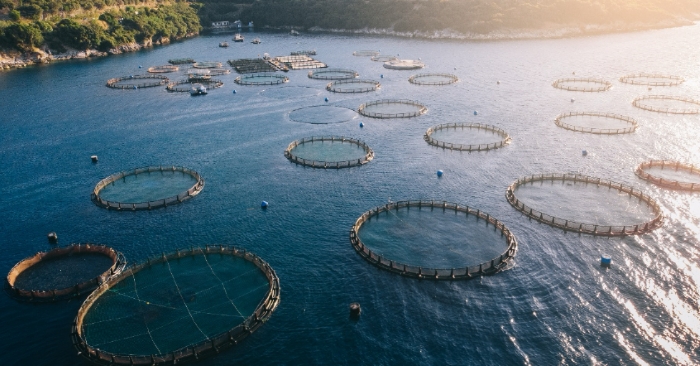
Aquaculture plays a critical role in the global food supply chain, both as a source of food for human consumption and in the production of animal feed. With continued growth forecast beyond 2030, the sector is facing major challenges. One of these is the substitution of fishmeal with soybean meal which, despite its nutritional properties, availability and cost, can negatively impact the growth and health of fish and shrimp.
Replacing fishmeal partially or entirely with plant protein sources is one of the key challenges facing global aquaculture. This shift can affect the health and welfare of fish and shrimp, as well as the profitability of production. It is essential to understand the specific impact on each species and to implement nutritionally effective and economically sustainable feeding strategies.
Under certain conditions, replacing a high proportion of animal protein with plant protein sources may reduce growth and promote intestinal dysbiosis, oxidative stress and inflammatory processes, forcing animals to divert more energy towards maintaining homeostasis and reducing feed utilisation efficiency. The result: slower growth, poorer feed conversion ratios and reduced overall farm yields.
Nutrition plays a pivotal role in addressing this challenge. Formulating more balanced diets helps to optimise nutrient
supply and supports the sustainable, safe expansion of aquaculture production. It also enhances production systems while helping to meet the growing demand for seafood. In addition, nutritional strategies are key tools for tackling other challenges facing the sector, such as rising production costs and the impact of climate change on farming systems. Adopting the correct strategies can help improve production efficiency and enhance the ability of organisms to adapt to changing environmental
conditions.
A nutritional strategy based on bioavailable free nucleotides
Nucleotides are essential components of DNA and RNA that play a key role in physiological processes, particularly in tissues with a high rate of cell turnover, such as the intestine and the immune system. Beyond meeting basic nutritional requirements, nucleotides can help maintain animal health and immune function, with potential benefits for productive performance.
To counteract the problems associated with the use of plant-based meals, supplementing diets with free nucleotides may promote cell renewal, help maintain intestinal health and optimise the use of metabolic energy. In this way, the animal can allocate more resources to growth, recovery and other essential processes, such as adaptation to stress. In addition, it helps support a well-balanced immune system, which is essential for supporting resistance to bacterial pathogens, improving disease tolerance and preserving the animals’ overall health and welfare.
Supporting production through nutrition
Nucleoforce® (Bioiberica, Spain) is a commercial range of functional products rich in nucleotides derived from yeast
extracts. Its different formulations have been developed to address specific objectives related to animal health, immunity, digestive function and productive performance.
A number of studies carried out using diets in which part of the fishmeal is replaced with plant protein demonstrated that including nucleotides in the diet of Pacific white shrimp Litopenaeus vannamei may enhance the immune response, increase survival following bacterial infections and improve production profitability. Against pathogens such as Vibrio parahaemolyticus and Vibrio harveyi, supplementation with Nucleoforce has shown favourable results in terms of disease tolerance and resistance to microorganisms commonly found in the aquatic environment.
Beneficial effects in fish species
This nutritional strategy has also demonstrated beneficial effects in other aquaculture species of commercial importance, including salmon, European seabass, gilthead seabream and tilapia. In salmon, nucleotides help maintain immune function and may improve survival during infectious disease challenges. In European seabass, they have been associated with improved growth, feed efficiency and digestive organ development.In gilthead seabream, they help maintain an appropriate immune response, while in tilapia they have been linked to improvements in growth, haematological and biochemical parameters, antioxidant activity and disease resistance.
Aquaculture therefore requires solutions capable of combining productivity, animal health and sustainability without compromising profit margins. These solutions must be supported by scientific evidence, technically validated under real production conditions and backed by consistent results for key performance indicators such as growth, survival and feeding efficiency.
Aquaculture companies need specialised products with proven success stories and a detailed understanding of their mechanisms of action. Finding a strategy that delivers scientific rigour and verifiable results will help improve production efficiency and place science-based innovation at the forefront.
Given the challenges associated with replacing fishmeal in aquaculture production, nucleotide supplementation is emerging as a key ingredient for the future of the sector, as it may help maintain immune function, support productive performance and enhance the animals’ ability to cope with a range of physiological and environmental challenges.
References
Novriadi, R., Ilham, I., Roigé, O., Segarra, S. 2021. Effects of dietary nucleotides supplementation on growth , total haemocyte count, lysozyme activity and survival upon challenge with Vibrio harveyi in Pacific White Shrimp, Litopenaeus vannamei. Aquac Rep 2021, 21, doi:10.1016/j.aqrep.2021.100840. Novriadi, R., Roigé, O., Segarra, S. 2022. Effects of Dietary Nucleotide Supplementation on Performance, Profitability, and Disease Resistance of Litopenaeus vannamei Cultured in Indonesia under Intensive Outdoor Pond Conditions. Animals 2022, 12, doi:10.3390/ani12162036. Segarra, S., Chau, T., Hoang, P., Tran, L. 2023. Immunoregulation and Resistance to Aquatic Pathogens with Dietary Nucleotides in Pacific White Shrimp, Litopenaeus vannamei. Fishes 2023, 8, doi:10.3390/fishes8060308.

September/October 2026 AQUA Culture Asia Pacific


