
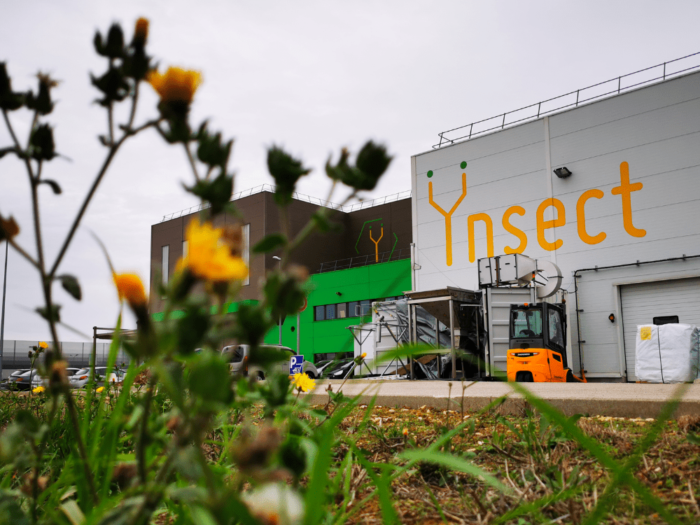
Industry pioneer Ÿnsect is exploring all possible options, including the possibility of a third-party takeover,†while fellow French startup Agronutris has filed a safeguard plan with a commercial court, says AgFunderNews.
In an article, AgFunderNews discussed the current situation with two French insect meal producers; Ÿnsect and Agronutris
Founded in 2011 by Antoine Hubert and Alexis Angot, Ÿnsect has raised almost $580 million over the past 13 years from investors including Astanor, BPI France, Crédit Agricole, Upfront, and Robert Downey Jr.’s Footprint Coalition. Using mealworm at a pilot facility in Dole, France, it started protein production at a large-scale facility in Amiens, France, last summer, but needs to secure more funding to get to a scale whereby it can “ensure profitability.â€
Ÿnsect, which filed a safeguard plan with a commercial court last September, issued a tender offer on January 17 to determine interest from potential investors or acquirers by February 17, 2025.
The company, which has 214 employees at facilities in Amiens, Dôle, Evry, and Paris, says it needs to secure about €130 million ($135 million), excluding liabilities, to achieve target revenues of €131 million ($137 million) in 2028.
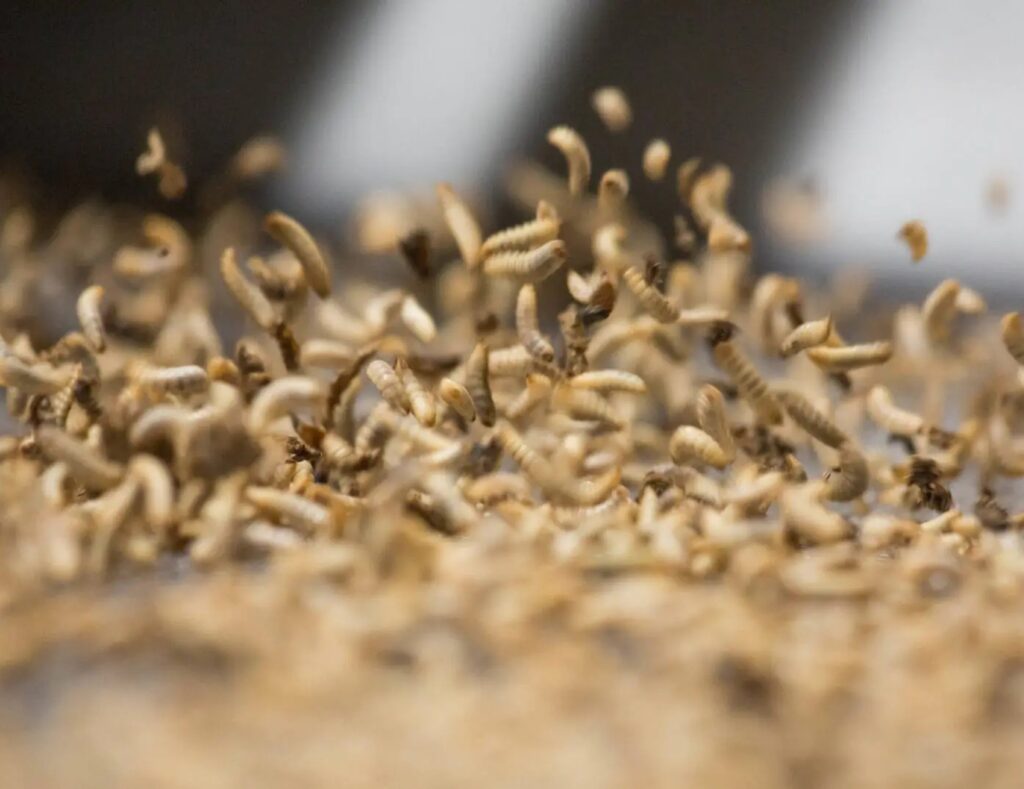
Agronutris files safeguard plan with French court
Fellow French insect ag startup Agronutris, meanwhile, has filed a safeguard procedure with a commercial court in Sedan for its holding company EAP Group. Based in Toulouse, EAP Group is responsible for Agronutris’ R&D activities and administrative functions. The agreement does not cover the group’s subsidiary Ardennutris, which produces oils and proteins from black soldier flies at Rethel in the Ardennes.
Agronutris originally focused on human food but later pivoted to focus on aquaculture and pet food. It raised €100 million in October 2021 from backers including SPI fund and the Mirova fund to construct the commercial-scale facility at Rethel, which started production in 2023 and announced partnerships with BioMar (insect meal for aquaculture) and Frayssinet (insect frass for fertilizers).
Agronutris told AgFunder News that the site’s full production capacity is estimated at 5,000 tonnes per year, which is expected to be reached by the end of 2025. Today, this [insect ag] market is under capacity, as industrial players in the sector face the urgent need to find alternatives to fishmeal. Insect meal presents itself as a relevant and innovative solution, offering nutritional quality equivalent to that of fishmeal. This has driven strong market growth, but the industrialization of insect meal production has not yet caught up with demand, leading to a supply-constrained market.
New generation learning from pioneers’ mistakes
One industry source said that there definitely is viability to the industry and massive operations are successful across the world. Ÿnsect is an early mover with a lot of the challenges pioneers face, and had specific individual flaws or challenges in their approaches or technologies. “There are winners and losers, but a key difference is there is no existing ‘field based’ insect agriculture. So there’s a combination of the learning curve being larger, and there being a big market creation challenge, for which we are largely over the hump, with wide scale BSF approvals in most markets.
“Some of the more successful insect operations are lower tech, more ‘back to basics’ in their approach such as those in Southeast Asia, which are not doing the massive automation and robotics that are so expensive and necessary in some of the geographies where we are seeing big failures such as Europe.â€
The challenges faced by some of its French counterparts did not mean that the whole segment was doomed, said Maye Walraven, general manager, USA, of French based InnovaFeed. “At InnovaFeed, we have chosen a modular development model to secure our industrial and technological ramp-up. The challenges that our French counterparts are encountering to move from the experimental phase to industrial scale operations we have overcome a couple of years ago, as have other players such as Protix, and we continue to successfully ramp-up our capacity in France in line with our strategic goals.â€
Read the full article at AgFunderNews.
Related articles in the print magazine:


