
 Singapore imports more than 90% of its food from various sources. Dependence on food imports makes the country vulnerable to external shocks and supply chain disruptions, which could arise from factors such as climate change, disease outbreaks, and geopolitical tensions.
The Singapore Food Story 2, announced in November 2025, aims to bring about overall food resilience, protecting against uncertainty in food supply and ensuring a reasonable sense of normalcy in times of disruption. The four pillars of the Singapore Food Story 2 (Diversify Imports, Grow Local, Stockpile, Global Partnerships) and our food safety system work in concert to ensure a resilient and safe food supply for Singapore.
ACT Fund 2 with new tranche of funding of SGD70 million
SFA will extend the Agri-Food Cluster Transformation (ACT) Fund (now known as ACT Fund 2) with a new tranche of funding of SGD70 million (USD54.8 million) over 5 years to continue to provide co-funding support for farms to increase their capacity and capability for local production.
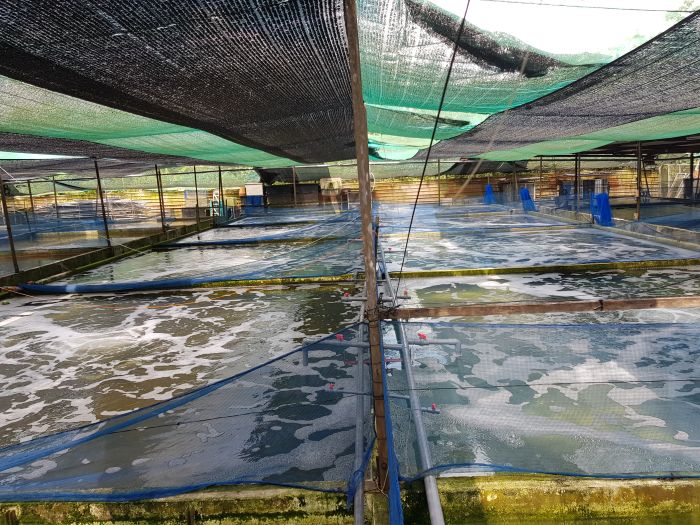
SFA will also further support farmers in adopting technologies to upgrade aquaculture farms through deploying technology demonstration projects that showcase practical, cost-effective pathways to higher productivity and more consistent output. SFA noted that while some technologies may perform well overseas, they may not be suitable in the small-scale, tropical, marine aquaculture farming environment, and farms may be understandably cautious about adopting them first. Through these demonstration projects, SFA will work with farms and technology providers to test these solutions in real operating conditions, so that their technical performance and operational suitability can be assessed before farms commit significant investment. SFA will continue to support farms to adopt successfully demonstrated technologies via the ACT Fund 2.
Broodstock centre and hatchery development
In 2024, SFA established the National Broodstock Centre (NBC) and Hatchery Development and Recognition Programme (HDRP) to increase the local supply of high-quality eggs and fingerlings for Asian seabass and marine tilapia. As of January 2026, five local hatcheries have obtained recognition under the HDRP which enabled them to receive high-quality eggs from the NBC and raise them to produce better fingerlings for the industry.
Currently, farms import the majority of their fry and fingerlings from overseas, with less consistent quality. In addition, imported fry and fingerlings undergo long transport stress which can result in lower survival rates. Higher quality fry and fingerlings from the NBC and HDRP allows grow-out farms to have shorter time-to- market and reduce feed costs, hence lowering overall production risks and operating costs.
In 2026, SFA is expanding this national breeding programme to include the red snapper. It will work with the industry to increase the supply of vannamei shrimp larvae and grouper fingerlings. SFA will facilitate partnerships between local hatcheries and overseas breeders to bring in selected parent stock, breed them here, and supply farms with reliable post-larvae/fingerlings.
New Integrated Hatchery Support Programme
SFA will be introducing a new Integrated Hatchery Support Programme (IHSP) to help local hatcheries adopt specialised feeds and quality vaccines that will maximise the growth potential of the high-quality fry or fingerlings supplied under the NBC and HDRP. Demonstration trials will be conducted to show the effectiveness of the use of high-quality and specialised early feeds and targeted vaccination protocols. This aims to build confidence and encourage farmers to make greater investments in quality inputs.
Offtake of local production
Commercial viability of farms depends on sufficient and sustained demand. In 2023, SFA worked with the Singapore Agro-Food Enterprises Federation (SAFEF) to establish it as an industry-level supply and demand aggregator that connects farmers, traders, and food processing companies through commercial contracts to better align market demand with supply. In 2026, SAFEF will also introduce new The Straits Fish® marine tilapia ready-to-eat (RTE) products in collaboration with TheSeafoodCompany. SAFEF will partner more F&B players to integrate SG Farmers’ Market® product range in their menus.
Predict environmental events
SFA will also enhance its Harmful Algal Bloom Prediction Model to predict environmental events more accurately, through integrating data such as chlorophyll-a, dissolved oxygen, and temperature levels collected by the SFA’s Aquaculture Sensing Network. This will provide more accurate assessments of potential algal bloom risk and enable us to alert farmers early so that timely mitigation measures such as aeration or emergency harvests can be performed to minimise stock losses. Source: Singapore Food Agency, 4 March 2026


