
At YHL Desaru, entrepreneurship focuses on using biotechnology and innovations to build a sustainable shrimp farming business.
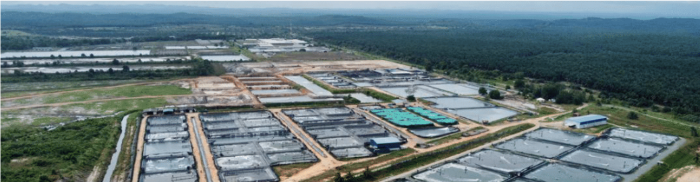
Among the more established and traditional shrimp farms in Malaysia, seven-year-old YHL Aquatic Sdn Bhd in Desaru, Johor stands above the rest. Covering a land area of 269.3 acres (107.7ha), YHL is now one of the largest shrimp farms in Johor state. Since 2023,it started hatchery operations in Mersing, producing post larvae using broodstock from the NBC (nucleus breeding centre), at YHLF Biotech (Thailand) in Phang-Nga, a subsidiary. YHL also operates Malaysia’s first BMC (broodstock multiplication centre) to reduce reliance on imports and to strengthen Malaysia’s shrimp aquaculture industry.
In 2025, the company received the “Asia Aquaculture Excellence Award – Excellence in Marine Shrimp Seedlings”, presented by the Malaysia Aquaculture Development Association (MADA), during its 25thAnniversary Celebration Dinner.
This prestigious award recognises YHL’s outstanding achievements in shrimp post larvae production and further validates the company’s commitment to IMTA (Integrated Multitrophic Aquaculture) practices for sustainable shrimp farming.
An earlier achievement is the JCI (Junior Chamber International) Malaysia Sustainable Development Award SDG 14: Life Below Water” in 2023 which reaffirmed the company’s leadership and innovation in sustainable aquaculture development.
From oysters to vannamei shrimp
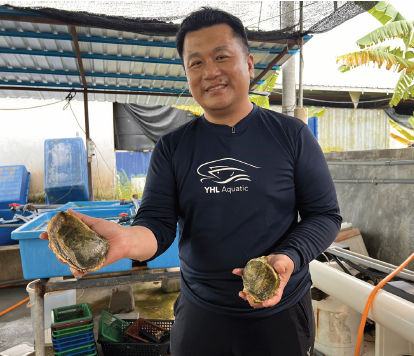
YHL’s Founder and Managing Director, Low Yuan Heng entered shrimp farming by chance. Low, a graduate in food science from Universiti Putra Malaysia, already had an established food additive business when he was encouraged to start oyster farming back in 2010.
“We have Crassostrea iredalei and C. belcheri. I saw an aquaculture opportunity as there is no specific breeding season and spats are available all year round in our coastal waters,” said Low.
“However, in order for the oysters to reach market readiness, an eight-month culture period was required, with anticipated cash flow projected only after three years. Therefore, I considered integrating another aquaculture species and explored shrimp farming as a complementary venture alongside the oyster.”
The Malaysian Bioeconomy Development Corporation(Bioeconomy Corporation), operating under the Ministry of Science, Technology and Innovation (MOSTI), has granted BioNexus status and recognition as a Bio-based Accelerator (BBA) company to YHL’s Tropical Oyster subsidiary and YHL Aquatics, respectively. It has continuously supported YHL in their transition and growth.
“As we grow larger, we believe that it is important to have stability in production, rather than seek to increase volumes with higher stocking density,” says Low Yuan Heng
Ponds are aerated. Lastly, we have oysters, bivalves and aquatic plants to filter out organic particles. Water is used for the culture of copepods, which are the live feed for the fish hatchery.”
This is the IMTA project. “This idea of this IMTA is to solve aquaculture’s pollution issue, reduce nutrient pollution, eutrophication and recycling waste into usable biomass. This is a first in Malaysia. We use nine acres (3.64ha) dedicated to IMTA which is still not fully complete,” said Low
Construction of shrimp ponds began in 2017, along side the existing oyster hatchery facility. The seawater intake is6m deep and 800m out at sea, which YHL acquired when it bought over the land previously set up for a fish hatchery.
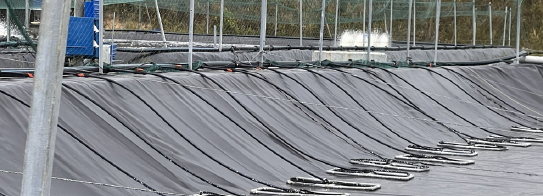
In the first phase of 10 acres (4ha), pond sizes were 0.1ha;in the second and third phases, pond sizes increased to0.25ha, and in phase 4, currently ongoing, ponds are0.4ha with 1.5-1.8m depths. Today, YHL’s farm in Desaruhas a total of 67 grow-out ponds with central outlets. Itwas necessary to line ponds and dykes with 1mm highdensity polyethylene (HDPE) as the area has sandy soil.
Each phase uses its own filtration system and reservoir.In phase one, stocking density is 200 PL/m2butdecreases to 150 PL/m2for ponds in the latter phases.Low clarified, “As we grow, we believe that it is importantto have stability in production, rather than seek toincrease volumes with higher stocking density.”
“We farm vannamei shrimp, producing 945 tonnes in2024 with a target of 1,500 tonnes for 2025. Each cycleincludes five partial harvests to ensure a daily supply of4-5 tonnes for Kuala Lumpur, Johor Baru and Singapore.Buyers appreciate the reliable daily shipments. In October,farmgate prices were MYR19.50/kg (USD 4.71) for size70/kg and MYR29.50/kg (USD 7.13) for size 30/kg. Thelowest price for size 70/kg in 2025 was MYR15/kg.
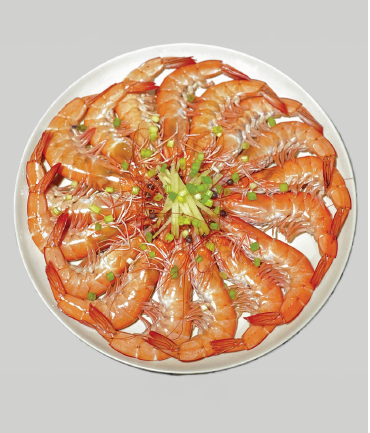
“Buyers seek shrimp of size 90-30/kg. Size 25/kg is thelargest size that they will take. I am proud of the colour ofour shrimp, rated 24 on the chart when cooked, reflectingour genetics. Our cost of production is around MYR19.50(USD4.71) and average selling price is MYR24.50(USD5.92).”
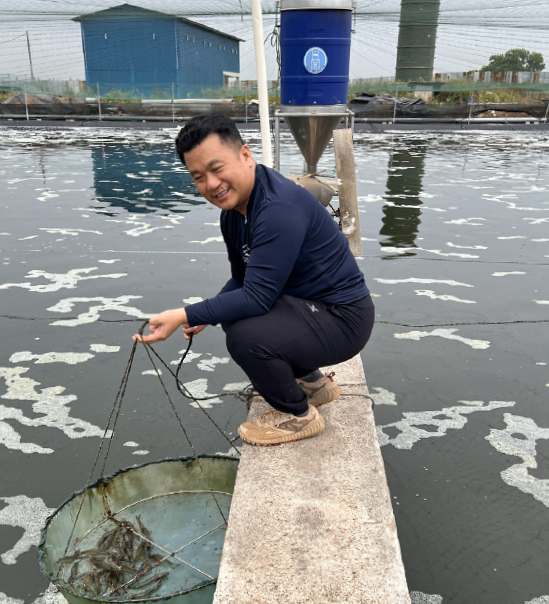
Low started his shrimp farming business on 10 acres(4ha) of land. Today, while sentimental towards his original oyster venture – selling oysters at MYR2 each in2012- he has steadily expanded shrimp farming in phases, making structural and operational improvements, after visiting several farms in Vietnam, Thailand and China.
The main driver: Sustainable aquaculture
Prior to starting his venture, Low researched sustainable farming policies, referring to the work by Dr Sarah J.Foster, a marine conservation scientist who provided science-based guidelines for sustainable farming.
“Fortunately, this area was previously used for silicas and production, which means I do not need to address concerns on mangrove destruction for shrimp farming. ”The Johor state government has designated the area covering 9,000 acres (3,642ha) as “Bio Desaru – The Organic Food Valley” as a major hub for organic farming, bio-agriculture, aquaculture, and eco-tourism.
Low applies his tagline, “Saving the oceans starts with me” when designing the infrastructure and developing operations for high density shrimp farming. All wastewater is channelled into sludge ponds and overflows into six sedimentation ponds continuously. “We stock milkfish and tilapia to clean up the water and add probiotics.
“As we grow larger, we believe that it is important to have stability in production, rather than seek to increase volumes with higher stocking density,” says Low Yuan Heng.
Ponds are aerated. Lastly, we have oysters, bivalves and aquatic plants to filter out organic particles. Water is used for the culture of copepods, which are the live feed for the fish hatchery.” This is the IMTA project.
“This idea of this IMTA is to solve aquaculture’s pollution issue, reduce nutrient pollution, eutrophication and recycling waste into usable biomass. This is a first in Malaysia. We use nine acres (3.64ha) dedicated to IMTA which is still not fully complete,” said Low.
Expansion and innovation
Construction of shrimp ponds began in 2017, alongside the existing oyster hatchery facility. The seawater intake is 6m deep and 800m out at sea, which YHL acquired when it bought over the land previously set up for a fish hatchery.
In the first phase of 10 acres (4ha), pond sizes were 0.1ha; in the second and third phases, pond sizes increased to 0.25ha, and in phase 4, currently ongoing, ponds are 0.4ha with 1.5-1.8m depths. Today, YHL’s farm in Desaru has a total of 67 grow-out ponds with central outlets. It was necessary to line ponds and dykes with 1mm high density polyethylene (HDPE) as the area has sandy soil.
Each phase uses its own filtration system and reservoir. In phase one, stocking density is 200 PL/m2 but decreases to 150 PL/m2 for ponds in the latter phases. Low clarified, “As we grow, we believe that it is important to have stability in production, rather than seek to increase volumes with higher stocking density.”
“We farm vannamei shrimp, producing 945 tonnes in 2024 with a target of 1,500 tonnes for 2025. Each cycle includes five partial harvests to ensure a daily supply of 4-5 tonnes for Kuala Lumpur, Johor Baru and Singapore. Buyers appreciate the reliable daily shipments. In October, farmgate prices were MYR19.50/kg (USD 4.71) for size 70/kg and MYR29.50/kg (USD 7.13) for size 30/kg. The lowest price for size 70/kg in 2025 was MYR15/kg.
“Buyers seek shrimp of size 90-30/kg. Size 25/kg is the largest size that they will take. I am proud of the colour of our shrimp, rated 24 on the chart when cooked, reflecting our genetics. Our cost of production is around MYR19.50 (USD4.71) and average selling price is MYR24.50 (USD5.92).”
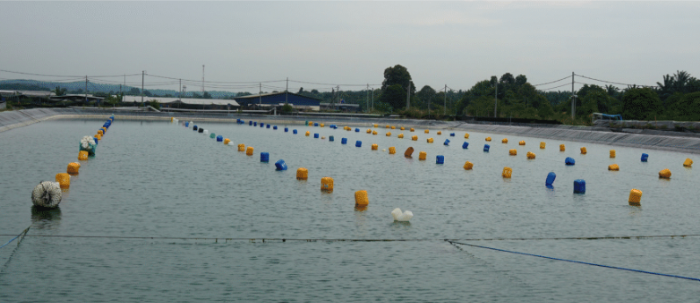
Innovating with a nursery phase
“In 2020, after completion of the second phase, we faced a serious Enterocytozoon hepatopenaei (EHP) outbreak. We were lucky as we already included a nursery stage in our farming protocol. It was a 1:1 model, one nursery pond of 150m3 to a grow-out pond of 0.1ha. We stocked 1,000 PL/m2 in the nursery pond. At such a high density, I could already catch an EHP infection at 1g at the nursery stage. If I were to stock directly into grow-out ponds, the signs of an outbreak can only be seen after 40 days.”
Low added, “It was at this time that I looked around for alternative genetics. In Phang-Nga, researchers at Thailand’s National Centre Genetic Engineering and Biotechnology (BIOTEC) were already using molecular genetics in shrimp to manipulate shrimp traits for aquaculture. Together we founded the subsidiary YHLF Biotech (Thailand) and established a NBC.”
The farming cycle starts with PL10 from his own hatchery in Mersing. The nursery cycle is over 21-28 days, and grow-out duration is 75-84 days. Low said that survival rates at harvest hover around 80%. “We are managing well because of our operational protocols. Our average daily growth is 0.4g-0.5g, which I attribute to the YHL-PHI TIK Litopenaeus vannamei post larvae from broodstock with rapid growth, robustness and disease tolerance to EHP developed at YHLF Biotech over 49 generations since 2018.”
Low explained, “Juveniles are transferred to grow-out ponds using pipes and tanks, with the entire process taking about four hours. We experience only about 1-2% loss during transfer. Our nursery ponds are distributed throughout the pond area. To minimise stress before transfers and later before harvesting, we include feed supplements such as extra minerals and astaxanthin.”
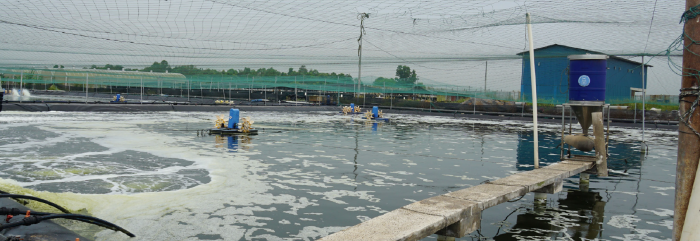
Among several other innovations that YHL has been testing out is the combination of pineapple extracts and Bacillus probiotics to mitigate white faeces syndrome (WFS). An idea from observations on shrimp farming in China is the in – house production of PSB (photosynthetic bacteria) and EM (effective microorganism) probiotics for improving soil/water quality and enhancing aquatic health by reducing toxins and pathogens. YHL has an innovative way to maintain aeration at 5ppm with air diffusers and paddlewheels.
The farm has 60 staff to operate ponds comprising of the usual hierarchy in pond management, where the farm manager oversees pond supervisors. “We recruit our technicians from Sabah and Sarawak, namely graduates from Polytechnic Sandakan in Sabah. We use auto feeders but, I noticed that feed conversion ratio (FCR) can range from 1.2 to 1.3 but can rise to 1.7-1.8 depending on the technician.”
 This article was first published in Aqua Culture Asia Pacific January/February page 16/17


