
At TARS 2025 on Shrimp Aquaculture in Chiang Mai, Thailand, industry leaders from Asia and Latin America dissected the shrimp sector, from genetics and production systems to governance and welfare. How does Asia’s shrimp value chain compare to that of Latin America’s far more consolidated model? It was an analysis of the value chain and overcoming shrimp aquaculture dysfunction in Asia.
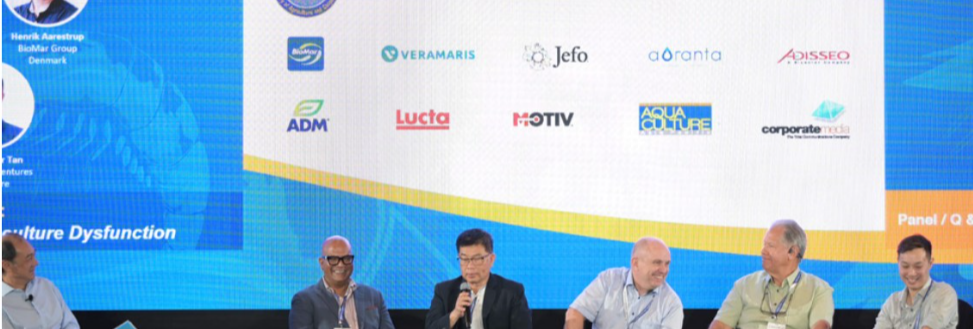
Ronnie Tan, Aquaculture Consultant at the US Grains and Bioproducts Council and moderator of this Hard Talk, arranged a live simulation of the shrimp value chain with a five-member panel. They were Ravi Kumar Yellanki, Managing Director, Vaisakhi Bio-Marine Pvt Ltd, India, representing genetics and hatcheries; William R. Kramer, Managing Consultant, CCM Agri Aqua Ventures Corp, HP Aquafarm Inc, Philippines, representing the farming segment; feed millers Dr Preecha Ekatumasuit, CEO, TRF Feed Mill Co Ltd, Thailand and Henrik Aarestrup, Vice President, LATAM, Shrimp & Hatchery, BioMar Group, Denmark; and Christopher Tan, Director, Mida Trade Ventures Pte Ltd, Singapore, representing the processor–buyer segment.
“We developed this as some people argue that the value chain in Asia is weak because of our fragmented nature,” clarified Ronnie on why he took this line of thought.
What makes good quality post larvae?
In the debate between nurture versus nature, which matters more to produce high-quality post larvae: genetics or hatchery practices? Ravi Kumar did not pick a side. “Both,” he said. Genetics “forms the foundation,” shaping performance from hatchery to processing. When all is equal, hatchery practices make or break that potential along the value chain.
“Disease-free broodstock, feeding post larvae well, and suppressing Vibrio loads are critical. If hatcheries fail to control Vibrio, they simply pass the inoculum downstream.”
Operational discipline matters. Large hatcheries must stock, sell post larvae, and complete cycles; a modular approach or periodic shutdowns reset Vibrio contamination. The goal is maintaining disease-free status, controlling bacteria, and ensuring robust post larvae.
Ronnie noted that farmers often blame genetics when they are disappointed with post larvae quality. Ravi Kumar pushed back, arguing that while genetic companies can deliver disease-free broodstock and desired traits, “beyond that, there is no role for genetic companies,” as hatchery practices determine outcomes.
From the farmer’s perspective, William framed it as “50–50” once husbandry takes over in the open and highly variable farm environment. On the compensation gimmicks by hatcheries (providing as much as 100% extra post larvae), William objects to offers of bonus post larvae to compensate for weak ones, preferring instead to plan around a realistic 15–20% survival allowance. “What matters to me is headcount in the pond, not freebies.”
Push for shrimp welfare with non-ablation practices
The practice of no eyestalk ablation in shrimp farming is increasingly becoming a certification requirement due to evolving animal welfare standards. Christopher gave his take from a buyer’s perspective.
“We have a clear line here. The high-end European retailers often impose non-eyestalk ablation production on welfare grounds. However, 95% of the commodity market is not so easily persuaded on non-ablation.”
Are buyers willing to pay more? “No,” added Christopher. “The cost must land somewhere else in the value chain.”
Technically, Ravi Kumar said that there are some advantages to non-ablation of vannamei shrimp broodstock.
“We can run without ablation for lines with strong reproductive efficiency. But not with the monodon shrimp, at least for now.”
He added that even within vannamei shrimp, low-reproduction lines still require ablation to achieve mating frequency and nauplii volumes.
“When non-ablation works, output equalises by the second month; mating percentages catch up, and broodstock can remain productive longer, up to 5 months from the 3.5 months with ablation practices. Hatchery survival rates seem better with post larvae from non-ablated broodstock.” He added that although field evidence suggests that post larvae from non-ablated broodstock are robust, it would be necessary to compare data on the field performance of post larvae from the same batch of broodstock, half of them ablated and the other half non-ablated.
On costs, Ravi Kumar said,
“There is no extra cost for non-ablated vannamei, provided the broodstock is from lines with good reproductive efficiency. For weaker lines, costs rise, which forces hatcheries to revert to ablation.”
Which to stock: PL10-12 or PL35 juveniles?
Ronnie sought feedback comparing Asia and Ecuador. Is there a cost advantage in using PL12 versus PL35 juveniles? As a farmer in the Philippines, William said, Personally given the conditions at our farm, we prefer stocking PL10-12 in our nursery or mother ponds at a maximum of 900PL/m2). We start transferring juveniles starting at 23 to 30 days of culture to respective grow-out ponds at densities of 130 to 150/m2. Our ponds average 1,300m2.”
Henrik described the Ecuadorian approach. There is an entirely different practice, linked with integration. Despite stereotypes, PL35 is not a hatchery product; it is farm reared. “In Ecuador, PL35 is part of the farm, not sold by hatcheries. Most transactions are still for PL10–PL12, but consolidation is pulling hatcheries into integrated groups. Big farmers are owning hatcheries and genetics. Therefore, published “market prices” are blurred within intra-group transfers.”
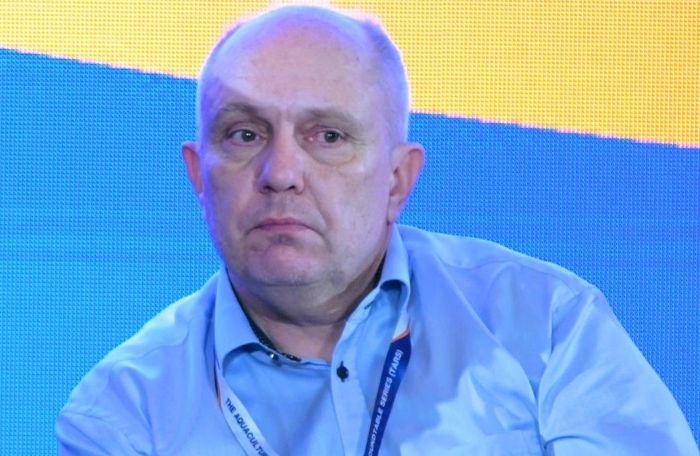
The panel discussed whether nurseries are part of the farm or standalone. Preecha explained the changes in Thailand. “Today, small farms increasingly coordinate with hatcheries to produce larger post larvae (PL17–PL18). Farms with more ‘modern operations’ ask for PL35–PL40 or so-called “jumbo” post larvae around 0.5g. Standalone nurseries flourished five years ago but have struggled. They have seen lower survival rates as post larvae sizes increase, while feed needs climbed and transport costs increased.”
In Thailand, size, and distance complicate matters. A truck transporting 300,000 small post larvae can take only 30,000-50,000 jumbo post larvae. At the farm, stocking is usually at 300,000-400,000PL, which needs 10 trips for the truck. “Therefore, for many Thai farmers, PL12 remains the norm,” said Preecha.

Integration and the salmon lesson
Henrik spoke on Ecuador’s semi-integration model. He described this as more of a “joint venture,” where feed millers have agreements with large producers.
“Similar to that in the salmon industry, they will split feed contracts into major, medium, and minority suppliers in order to have negotiating leverage and not depend on just one large feed miller.”
He cautioned that full vertical integration has its downsides.
“You can only negotiate with yourself; you must finance raw materials on top of production and absorb operational risks. The trend reflects the salmon industry, where some integrated groups are even putting feed divisions up for sale, such as Mowi. I would say that the Ecuadorian model is satisfactory.”
Thailand is different, said Preecha.
“TRF is integrated into the shrimp processing system. The whole ecosystem (farming, feed production, and processing) acts as a “society” or “community.” The processor dictates their buying needs (size 50, 30/kg, etc.). This information is passed on to the farmers. We, as feed millers, liaise with farm associations and processors so that farmers plan harvests to meet the processors’ order books.”
Henrik added that Ecuador has a forward or downstream integration. “Farms are buying processing plants to get full control of scale for year-round retail supply. This has boosted traceability. With this advantage in hand, few big farmers want to integrate upstream into feed production.”
When the blame is on feeds
“Feed companies are usually blamed for poor shrimp growth performance,” Ronnie prompted. William responded, “First,B70% of the problem is in the farm. Poor management leads to overfeeding and low survival rates. Farms with best practices can deliver solid returns (ROI) even by using average quality feed.”
Henrik acknowledged that finger-pointing exists but backed a systematic approach at the farm. “Good farm management can even mask a weaker feed. Major customers consistently evaluate various feed suppliers and monitor performance benchmarks. This happens in the shrimp and salmon world.”
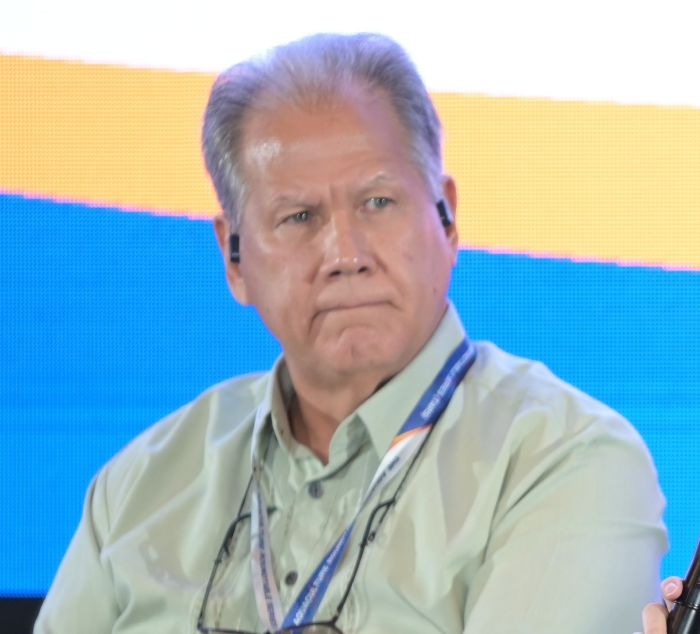
Preecha explained that when crops fail, farmers often blame poor post larvae, feed, disease, or climate change. However, he believes that competition among feed mills worldwide has improved feed quality. While feed is important, results depend on three factors: post larvae quality, feed quality, and farm management.
The promise of acoustic feeding
Ecuador has embraced acoustic feeding. AQ1, now part of BioMar, has among the best-known systems. However, acoustic feeding draws scepticism in Asia. Has it really improved the feed conversion ratio (FCR) and sped up cycles in Ecuador?
Henrik affirmed that gains come from the device, nutrition, and the management system it enables. “Together with improved genetics, farms moved from 2–3 cycles/year to 5 or even 6 cycles/year to produce small-size shrimp. However, this system requires large capital investment and strong organisations to roll out and utilise the technology. It is feasible in consolidated Ecuador but is much harder in fragmented Asia.”
Henrik said that by volume, the vast majority of Ecuador’s output comes from acoustic feeding practices. By hectares, there is still room to expand.
In India, Ravi Kumar sees the uptake of smart feeders “catching up,” despite high capital expenditure. Small ponds make manual feeding feasible. “Such technology saves feed by reducing FCR by ~0.2, and keeps pond bottoms cleaner, allowing for longer cycles to produce large-size shrimp. Timed dispensers are not that revolutionary, but acoustic systems really decouple from workforce reliance.”
Preecha concurred with Ravi Kumar. In Asia, small ponds, high stocking density, and environmental sounds complicate the use of sensors. However, he foresees that AI-assisted sound filtering, CCTV for shrimp behaviour monitoring, and integration with aerator telemetry will help.
William echoed on the Philippines’ lag. “Acoustic feeding is not considered partly because small, intensive ponds have “so much activity” inside and out.” Even so, he accepts the premise that FCR improvements of 0.2-0.3 are plausible.
Henrik reminded that algorithms already filter aeration and pond noise. AQ1 has even solved a bug where a stray sound mimicked clicks of shrimp mandibles.

Post-harvest: Great shrimp, mediocre chains
Some Asian farmers harvest high-quality shrimp, but post-harvest chains fail to preserve them. Can buyers shorten the chain?
Christopher responded that geography is a factor. Indonesia is a large archipelago, and farms with optimal conditions are on remote islands, where it is not feasible to site a processing plant. It takes 3-4 days for the harvest to reach processors.
“However, the irony is that almost 70-80% of global markets accept subpar shrimp. The US, the largest market for peeled shrimp, accepts heavily soaked shrimp. China’s vast dim sum segment values convenience over pristine texture; only Michelin-level niches demand the best quality. So, until the demand changes, supply chains have little incentive to upgrade.”
On the topic of soaking shrimp, Ravi Kumar stated that STPP (sodium tripolyphosphate) at about 5% is commonly used for soaking shrimp. Some buyers, especially in Europe, now prefer chemical-free or alternative “salt” cures.
“Unfortunately, in most markets, even Japan, there is demand for heavily soaked shrimp. European consumers tend to avoid STPP, while allowing for 20–30% glazing. Market preferences are reflected in their willingness to make cost-related decisions,” said Christopher.
Fragmentation as risk or resilience?
Over 70% of Asian shrimp production comes from small- and medium scale farms, while the same share in Ecuador comes from large groups. Is this a strength or a weakness?
Ravi Kumar noted, “In fragmented Asia, exporters often trade rather than own responsibility. Yet the advantage of smallholders is that they are resilient: when they fail, they recover fast. Big corporations, once down, struggle to pivot. His view is that Asia will be unable to integrate rapidly; therefore, collaboration across genetics, hatchery, feed, farm and processing is crucial.
Preecha added that small farms can time their production to China’s “golden periods” (four times a year). They tailor output to preferred colours and sizes and operate with tightly controlled labour costs. The main constraint, however, is financing—high capex tools such as acoustic feeders remain out of reach.
For William, Asia’s fragmentation benefits across more people in the value chain, but the continent’s geographic and operational variability makes standardisation hard, while offering multiple pathways to compete.
Henrik referred to market served. For local live or premium niche markets, small farmers can beat giants. For mass retail with year-round contracts, low cost and traceability, large integrated groups have the edge.
Christopher injected a buyer’s view that “integration must add value”. “Many farmers prefer the freedom to sell to the highest bidder, especially when disease tightens raw material supply and processors, with thousands of workers, must keep lines running. Unless integration improves farm income or risk, farmers will not rush into it.”
What can Ecuador learn from Asia?
This was an open discussion with participants. Henrik sees Ecuador on an intensification journey, while Asia offers a cautionary tale on carrying capacity and limitations on stress and disease. As intensity increase, feeds in Ecuador converge toward those in Asia. For Ravi Kumar, the farming systems are “as different as baseball and cricket,” i.e., huge, open ponds with all pathogen-exposed (APE) broodstock in Ecuador versus smaller, biosecure farms with disease-free stocks in Asia.
Hervé Lucien-Brun, Jefo Nutrition, France, flagged a systemic risk since about 85% of Ecuadorian farming is located on one estuary (Gulf of Guayas), and there has been no study on carrying capacity of water resources.
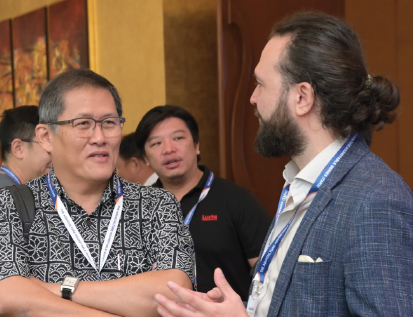
Kembang Subur, Malaysia.
Exceeding this could lead to a big crash, as white spot disease (WSD) once did. However, Andrés Rivadulla, BioMar, Ecuador, noted some large groups are already seeking new farming areas outside the gulf, a geographic diversification borrowed from Asia’s painful experience.
Pablo Montalbetti Gómez de la Torre, Vitapro – Alicorp Ecuador, believes that growth must come from intensification, not hectarage. The way is to increase density sustainably, detect early disease signals, and pace growth, despite the pressure to recoup investments.
How can Asian producers position themselves to compete with Ecuador? According to Christopher, there are paths like niche markets such as “live”, “cook-from from live,” certifications or efficiency. However, many niches come and go. “The biggest challenge for most Asian processors is raw-material price volatility. Owning ponds allows you to stabilise input costs, whereas buying externally leaves you at the market’s mercy.
“Still, seasonality creates windows. Ecuador can be uncompetitive, as during recent outbreaks (WSD drove a price spike), early in the year (February–March) and sometimes in August–September.” His recommendation is to focus on the cost curve and take advantage when these windows open.
Henrik’s 30-second postscript was, “Ecuador’s high labour cost leaves room for Asian processors in advanced value-added items. Competing head-on in whole and frozen is tough. In more complex consumer products, Asia’s lower labour costs can shine.”
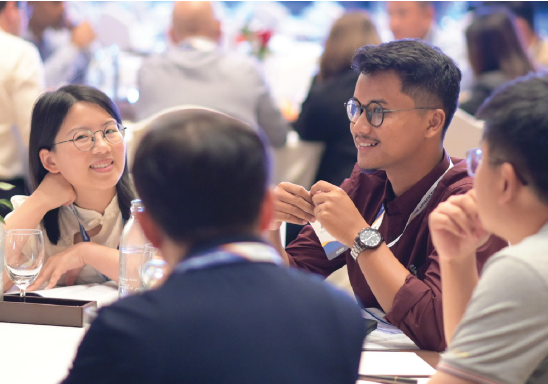
Session – Part 1: The Exchange.
This article was first published in Aqua Culture Asia Pacific January/February page 22-25


