
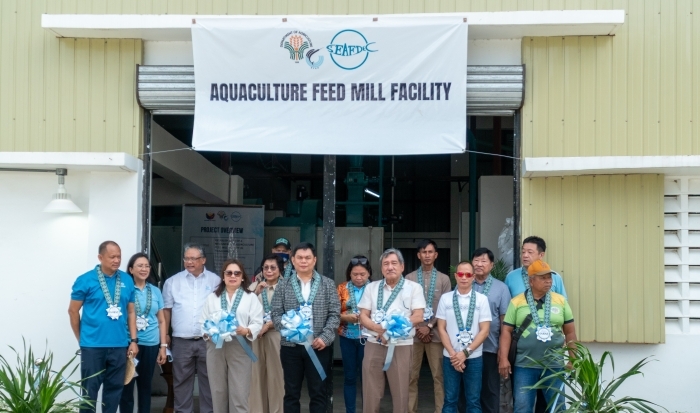
The Southeast Asian Fisheries Development Center Aquaculture Department (SEAFDEC/AQD) located in Barangay Buyu-an, Tigbauan, Iloilo inaugurated a PHP30 million aquafeed mill – marking a major advancement in sustainable aquaculture development in Western Visayas.
SEAFDEC/AQD and the Department of Agriculture–Bureau of Fisheries and Aquatic Resources (DA-BFAR) jointly implemented the project. SEAFDEC/AQD conducted the feasibility study, co-funded the initiative, supervised construction, and will manage the operation of the feed mill to ensure science-based and efficient production systems.
Formally titled the “Establishment of a Medium-Scale Aquaculture Feedmill in Tigbauan, Iloilo,” the facility will produce up to 5 tonnes of fish feed per day, supporting cost-effective feed production for commercially important finfish species such as milkfish and tilapia.
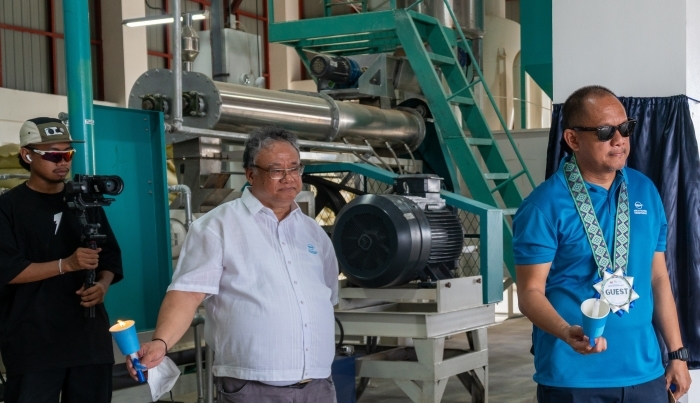
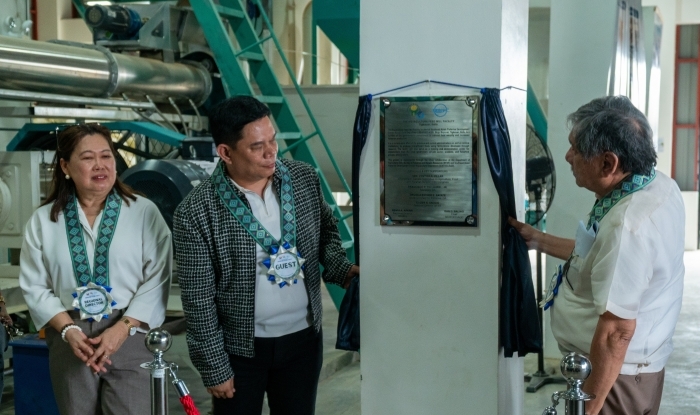
Program activities included the blessing of the facility, unveiling of the marker, ceremonial switching-on of equipment, and a guided tour of the plant. DA-BFAR Director Remia Aparri delivered the welcome remarks, SEAFDEC/AQD Chief Dan Baliao delivered a message, and DA-BFAR Assistant Director for Administrative Services Zaldy Perez delivered the closing message.
Aparri, DA-BFAR 6 Regional Director said,
“This is a strategic investment of the government to support aquaculture farmers in the region. The production capacity is 5 tonnes per day but can reach 8 tonnes per day. It will benefit 6,240 farmers annually, demonstrating the scale and significance of our aim to advance aquaculture productivity in Western Visayas. Note too that we are expecting to produce lower cost feeds, compared to commercial ones.”
Baliao said.
“This plan to establish an aquafeed mill here was put into motion 3 years ago but the journey started years before 2023. This feed mill stands as another way for SEAFDEC/AQD to bridge the gap between R&D and practical application and a sign of the Department’s unwavering commitment to its stakeholders. This aquafeed plant in Visayas will help boost the production of farmers using formulated cost-effective and nutritionally balanced feeds. This would eventually help in increasing and sustaining the aquaculture production of finfish in ponds and cages in the area,”
Perez added,
“This feed mill is not simply about producing feeds—it is about transforming the economics of aquaculture. By utilising locally available ingredients and science-based formulations developed through research of SEAFDEC AQD and supported by NFRDI and BFAR, we are making a decisive move towards the commercialisation of the output of research to industry application and benefit.
“This project is not meant to compete with existing industry players. Rather, it is intended to complement the current supply system and address gaps—especially during times when feed prices are high, and supply is constrained.”
 The project is expected to help reduce production costs and improve aquaculture productivity in the region. The facility will use locally sourced raw materials, reduce reliance on imported inputs, and support regional crop producers.
The plant includes a hammer mill, mixer, extruder, dryer, oil spray system, cooler, and bag sealer, which ensure efficient processing, consistent feed quality, and longer shelf life. Baliao said that he is hopeful the feed plant will potentially serve 160 hectares of ponds.
SEAFDEC/AQD is also assisting BFAR to establish similar feed mills in Bulalacao, Oriental Mindoro, and in Bolinao, Pangasinan that will churn out low-cost feeds using SEAFDEC/AQD’s formulation for milkfish and tilapia.


