
Why field intelligence must guide the next phase of shrimp breeding
Balasubramaniam V is owner of the 60-acre (24ha) Certitude Farms in Tamil Nadu and Secretary of the Prawn Farmers Federation of India (PFFI).
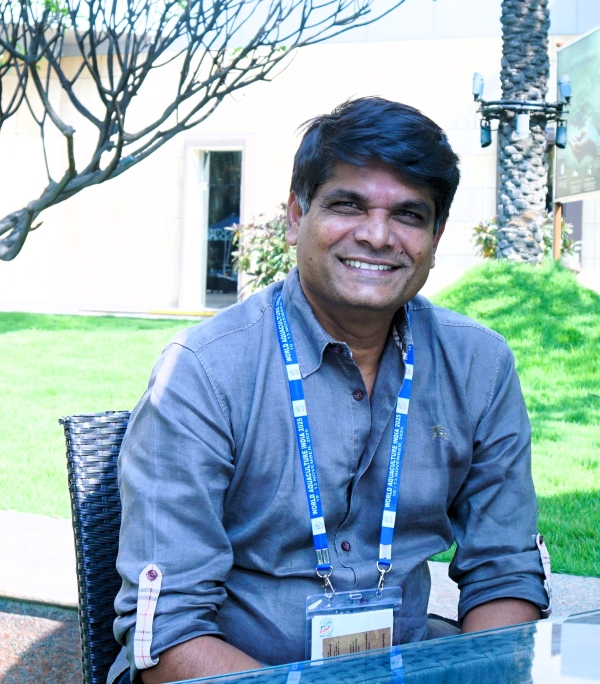
“Genetics cannot be designed only in laboratories. It must be guided by field intelligence from farms.” This is a thought that has been on my mind, ever since I first listened to geneticists speak at an Aqua India conference in 2018 in Chennai.
The scientific discussion on genetics was impressive and highly advanced. But it also made me think about how those ideas can connect with the daily experiences of farmers. Over the past year, my work with farmers and scientists through the Collaborative Shrimp Disease Investigation Program (CoSDIP) has reinforced that belief.
CoSDIP began as a farmer-led effort to better understand some of the disease situations emerging in shrimp farms. Farmers, scientists and industry partners come together to discuss and investigate. Farms are being monitored, samples are being collected and laboratories are analysing what we are seeing in the field. Recently, Oscar Henning, a geneticist working with Centre of Aquaculture Technologies (CAT), pointed out that such programs could actually provide valuable information for training researchers in genomic selection — linking DNA profiles with shrimp that perform well under real farm conditions.
I believe that this is exactly where the future of shrimp genetics must go — closer to the farm.
The farm is not a laboratory
Shrimp farming happens in a complex biological environment. No two ponds are the same. Water sources differ. Pond age differs. Organic loads accumulate over time. Microbial populations change continuously. Weather patterns shift. Management practices vary.
Anyone who has spent time in shrimp farming understands this. In response to my earlier LinkedIn post on CoSDIP, Madhu Mohan Talluri, a core CoSDIP team member, made this observation: he pointed out that microbial consortium and environmental factors in shrimp ponds can vary significantly across regions in India. These variations influence pond ecology, shrimp health and overall production performance. Without close monitoring of real-time culture practices in farms, it is difficult to generate the reliable data needed to guide genetic improvement programs or to select strains suited for local conditions.
Bridging the gap
The farm itself becomes a critical source of knowledge. Bridging the gap –between farms and breeding programs, geneticists today have access to powerful tools. Genomic technologies and structured breeding programs have significantly improved shrimp aquaculture over the past two decades. However, there has always been a natural gap between breeding environments and grow-out farms. Breeding programs operate under controlled conditions designed to measure specific traits accurately.
Farms, however, operate in open systems where environmental factors, microbial dynamics and pathogen exposures interact continuously. Programs like CoSDIP can help bridge that gap. While the primary objective of CoSDIP is disease investigation, along the way, the program has also generated structured field intelligence.
Over time, data from real farming conditions and real environmental variability can help scientists and breeding programs better understand how shrimp actually perform under the environments where they are grown.
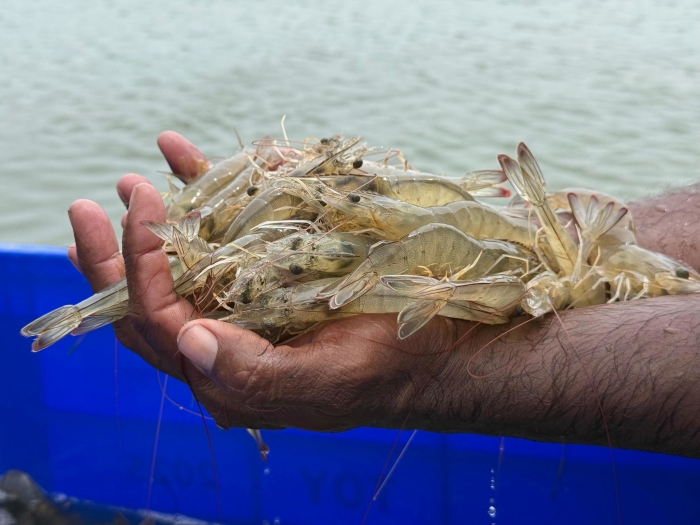
Importance of genetic diversity
At our CoSDIP meetings, the topic on maintaining diversity within breeding populations was discussed. Dr. Rajkumar Singh, one of our field coordinators involved in the investigation, expressed this concern very clearly. He said, “Diversity in the genetic pool from where lines are developed must be the norm and not a choice. Depending on only a few lines can lead to catastrophic results sooner than later.” His comment reflected something agriculture has learned repeatedly across sectors — narrowing the genetic base increases vulnerability.
Ensuring sufficient diversity in breeding programs therefore is essential for the long-term resilience of the shrimp farming sector.
Management helps, but it cannot do everything
Shrimp farmers invest heavily in farm management. Pond preparation, liming, aeration, feed management, water quality control and biosecurity practices are now routine across much of the industry. Clean post larvae and good management practices remain the foundation of shrimp farming. However, experience across farming regions also shows that some disease challenges cannot be solved through management alone.
In terrestrial livestock and fish farming, vaccines play a major role in disease control. In shrimp farming, however, practical vaccination systems are not currently available. Once disease enters a pond, curative options remain extremely limited. That reality makes genetics even more important. Shrimp that can tolerate environmental stress will be able to withstand pathogen exposure or continue performing under moderate disease pressure, and hence make a significant difference to crop stability.
Listening more carefully to the farmers
These reflections have also impacted on another new research area – the possibility of developing genetically improved pathogen-tolerant lines of the indigenous shrimp Penaeus indicus. The idea is still evolving, but the objective is clear. It is not simply to create another breeding effort, but to think carefully on its breeding direction –it should be guided by real farming conditions.
Historically, much of the feedback guiding genetic improvement programs has naturally come from the hatchery sector. Hatcheries play an essential role in the industry and have contributed greatly to the development of shrimp aquaculture. Hatcheries and farms operate under very different environments. The farm is where shrimp ultimately face the full complexity of environmental stress, microbial dynamics and pathogen exposure. That is where the true test of genetic performance takes place. As the industry evolves, we need stronger mechanisms that allow structured feedback from farms to flow back into breeding programs. Programs like CoSDIP can help begin that process.
A shared responsibility
The future of shrimp breeding will neither be determined by genetics alone nor only by farm management. It will depend on continuous interaction between breeding companies, scientists and farmers. Breeding companies bring expertise in genetics and genomics. Scientists contribute analytical tools and research frameworks. Farmers contribute daily observations from the field.
When these perspectives come together, the industry gains something extremely valuable — a clearer understanding of how shrimp actually perform in the environments where they are grown. That brings us back to the thought that started this reflection.
“Genetics cannot be designed only in laboratories. It must ultimately be guided by field intelligence from farms.”


