
New report shows how independent certification and assurance are driving measurable environmental and social change across global farmed seafood
Utrecht, the Netherlands –Nearly 7,000 verified environmental and social improvements were recorded at ASC-certified farms around the world in 2025, according to the Aquaculture Stewardship Council’s (ASC) newly published 2025 Impact Report.
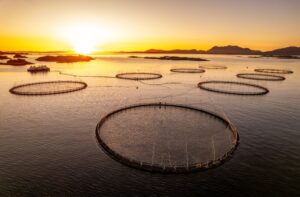
Marking ASC’s 15th anniversary, the report captures a defining year for the programme, combining continued global growth with the launch of the ASC Farm Standard, rapid expansion of feed certification and growing improvement pathways for producers.
2025 at a glance:
- 6,995 environmental and social improvements recorded at ASC-certified farms
- 2,543 ASC-certified farms across 51 countries
- More than 2.9 million tonnes of ASC-certified seafood produced, up 9% year-on-year
- 91 ASC-certified feed mill sites across 27 countries, up from 22 in 2024
- 30,236 ASC-labelled products available globally
ASC CEO Chris Ninnes said,
“Impact needs evidence. The nearly 7,000 environmental and social improvements recorded at ASC-certified farms give us tangible proof of change happening on the ground.
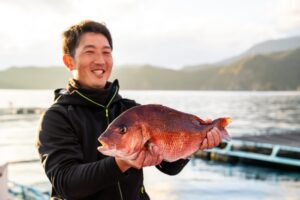
“As ASC marks 15 years, our programme is also reaching further across the systems behind farmed seafood – from feed ingredients to farms, supply chains and markets. That gives us greater opportunities to identify risks, drive improvement and provide credible evidence of progress.”
Extending impact from feed to farm
A defining milestone in 2025 was the launch of the ASC Farm Standard, bringing requirements covering farm management, environmental performance, human rights, and animal health and welfare into a single framework spanning species and production systems.
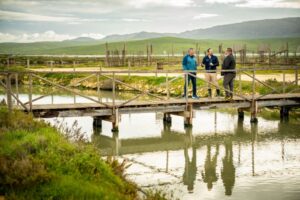
ASC’s reach also extended further upstream. Feed certification grew rapidly during the year, and from 31 October 2025 ASC-certified farms were required to use ASC-conforming feed – connecting farm certification more closely with feed mills and the ingredients underpinning aquaculture production.
Beyond certification, the Improver Programme by ASC continued to provide structured pathways for producers to make verified, time-bound environmental and social improvements. By the end of 2025, 21 farm sites across five countries were active in Aquaculture Improvement Projects, while two successfully completed projects had achieved ASC certification.
Proof behind the progress
Central to the ASC programme is the independent assurance behind ASC’s impact.
In 2025, 1,454 farm audits were completed across 51 countries. Independent Conformity Assessment Bodies assess farms against ASC requirements, with audit reports and certification decisions publicly available.
Where requirements are not met, farms must take corrective action, with 28 certificates suspended during 2025 following unaddressed non-conformities.
Together with oversight, traceability, monitoring and data-driven risk identification, this provides evidence that sits behind the ASC label – increasingly important as seafood businesses navigate supply chain risks, evolving regulation and growing expectations for credible environmental and social claims.
Chris Ninnes added,
“Change requires practical pathways to improve, systems that measure progress and independent mechanisms that provide confidence in what has been achieved. As aquaculture continues to grow, our focus is on working with producers and partners across the supply chain to scale measurable environmental and social improvement – and provide the proof behind that progress.”


