
On Friday, 16 October, Peru’s Production Ministry announced it will not authorise a second fishing season for anchovy (Engraulis ringens) in the north-central area of the Peruvian coast, because the scientific evaluation of the Institute of the Sea of Peru (IMARPE) identifies biological and oceanographic conditions that require prioritizing the protection and sustainability of the resource.
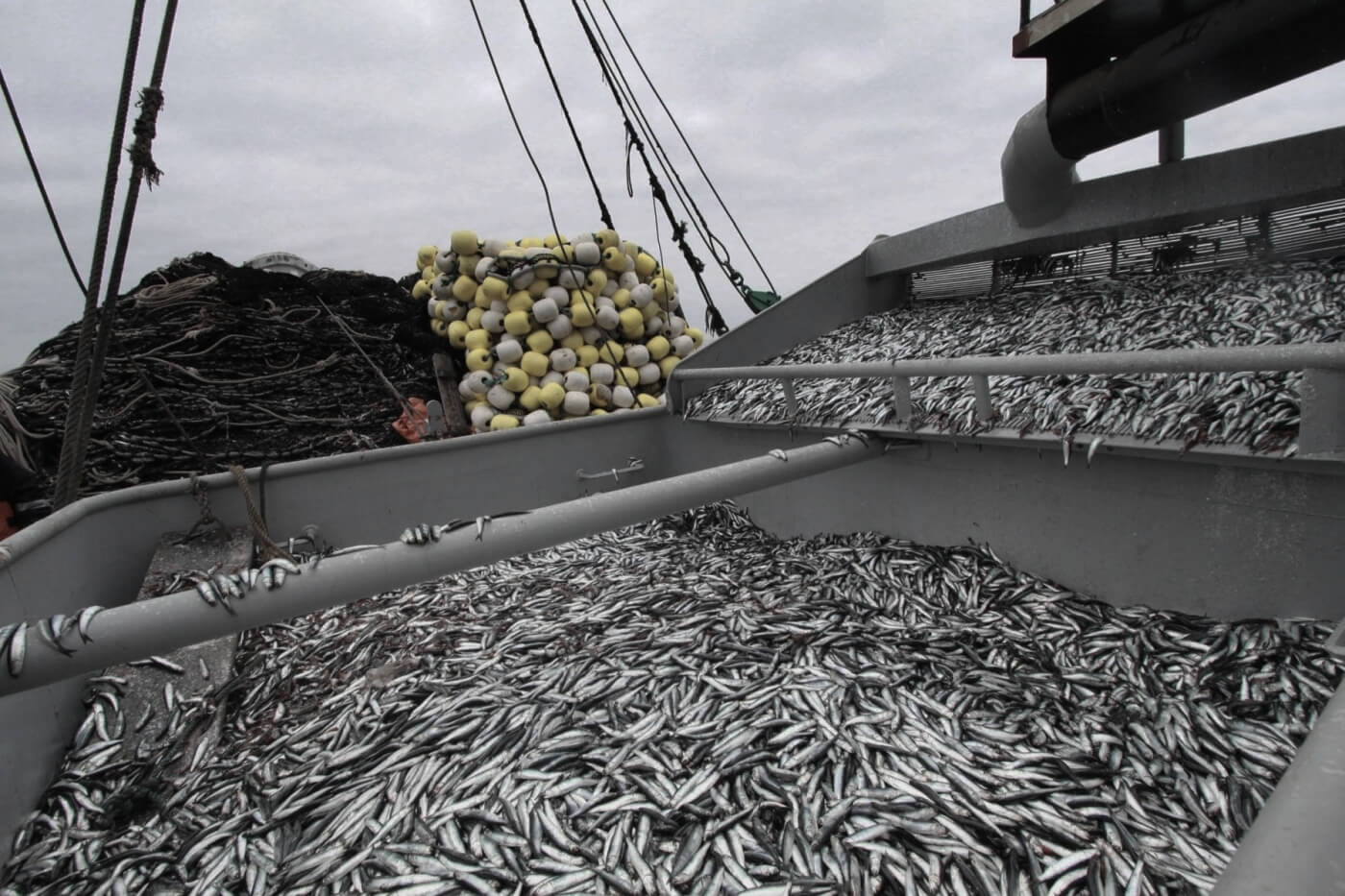
The results of Scientific Cruise 2609-10, with information as of October 7, 2026, estimate an acoustic biomass of approximately 5.12 million tonnes. This figure is 27.9% lower than that recorded in the summer of 2026 and 22.8% lower than the average of winter-spring acoustic biomasses for the period 1996-2025. In addition, there are important indicators for management decisions: juvenile specimens represent 79% in number and 65% in weight; and, there is evidence of a reproductive activity lower than the pattern but with spawning episodes that indicate that the anchovy is making the effort to reproduce.
Deputy Minister of Fisheries and Aquaculture, Jesús Barrientos, said
“This decision is based on scientific evidence and our responsibility to protect the anchovy. The high presence of juveniles and the current sea conditions require prudent action to preserve the resource’s capacity for renewal. We cannot make decisions thinking only about the short term; we must also take care of the fishing opportunities for the coming years.”
IMARPE identified anomalous warm oceanographic conditions associated with changes in anchovy distribution, with increased concentration near the coast, southward shift, and marked deepening of shoals. This environmental scenario, assessed together with size structure and other biological indicators of the resource, reinforces the need for a precautionary approach.
In the reproductive field, the indicators show a lower activity than their historical patterns. However, the persistence of spawning episodes between Chimbote and Pisco is reported. This result is part of the scientific monitoring of the resource and should be analyzed together with the other indicators to evaluate its situation and evolution.
The decision not to open a new season seeks to prevent extractive activity from developing without sufficiently favorable conditions to sustain it, and prioritizes the responsible management of a fundamental species for Peruvian fishing activity.
“Protecting the anchovy is also protecting employment, investment and the entire production chain linked to this strategic resource for the country. For this reason, we will continue to work with IMARPE in the monitoring of the conditions of the sea and the anchovy population, so that management decisions respond in a timely manner to scientific evidence,”
added Barrientos.
Through IMARPE, PRODUCE will maintain permanent scientific monitoring of anchovy in the north-central zone, through periodic evaluations of its biomass, size structure, spatial distribution, behavior, reproductive activity and relationship with oceanographic conditions. This research will allow us to know the evolution of the resource, identify changes in its availability and biological status in a timely manner, and generate updated technical information to support fisheries management decisions, with the aim of protecting its capacity for renewal and guaranteeing its sustainable use.
PRODUCE will continue to monitor other hydrobiological resources. Warm oceanographic conditions also make it necessary to evaluate the situation of other hydrobiological resources, such as samasa, a species that tolerates and thrives in warm waters. In coordination with IMARPE, PRODUCE will continue to evaluate its biological and fishing conditions, as well as alternatives for its sustainable use, in accordance with the available evidence and the current regulatory framework.
The protection of anchovy is a priority because of its importance for the production of fishmeal and fish oil and because of its ecological function in the marine ecosystem. Fisheries management must respond to the real conditions of the resource, with decisions based on science that allow preserving its sustainability and the opportunities for development of the sector in the long term.


