
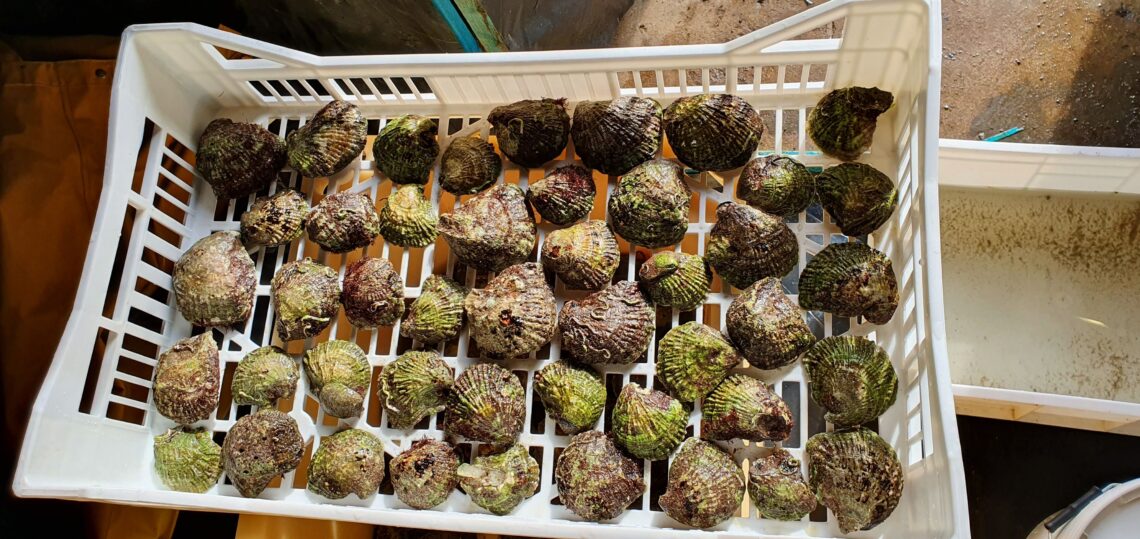
A partnership between two of the most progressive aquaculture companies in Scotland has borne
fruit with the successful development of an innovative new DNA-based method of detecting the
pathogen Bonamia in European flat oysters. Orkney Shellfish Hatchery is a state-of-the-art
aquaculture hatchery specialising in premium, disease free shellfish products for aquaculture and
restoration projects. The Xelect team are based in custom built laboratories in St Andrews and are a
leading independent aquaculture genetics provider. Xelect manage broodstock and genetic
improvement programmes for major aquaculture producers all around the world.
Nik Sachlikidis from the Cadman Capital Group, owners of Orkney Shellfish Hatchery, commented:
“This is another demonstration of our commitment to using science backed, cutting-edge technology
to provide the highest possible standard of product. We know that our oysters are exceptional, and
now we can also demonstrate that they’re disease free too. We’re continually looking at new ways
to improve our native oyster spat product, and to set new standards for industry best practice in this
area. Xelect have done a great job of working hand-in-hand with our team to solve some key issues
facing the Native Oyster hatcheries and ensuring our broodstock are Bonamia free.â€
Bonamia ostreae is a major problem for many wild native oyster populations and is linked to the
major decline in abundance throughout their range. Bonamia testing is widely available but is
typically ‘destructive’ – meaning that the oyster is damaged or killed, limiting the ability of the
hatcheries to identify and then utilise disease-free broodstock for larval production. Orkney Shellfish
Hatchery can now comprehensively ensure the Bonamia-free status of each individual incoming
native oyster broodstock, by using a non-destructive testing method. The outcomes are a much
higher degree of hatchery biosecurity and wider options for native oyster broodstock sourcing.
Xelect used a tried and tested method known as a Taqman Assay but adapted it to the specific
challenge of testing for the presence of the pathogen from a filtered water sample – a technique
called environmental DNA (eDNA) analysis.
Dr Paolo Ruggeri from Xelect oversaw the analysis. “Bivalves like the flat oyster filter large volumes
of water every day, and in the process shed tiny amounts of their own DNA, and the DNA of any
parasite they are carrying. Using a highly sensitive DNA test we can sample the waters the oysters
live in to identify the presence of the pathogen. It’s an extremely cost effective and humane
approach, and the oysters don’t even need to leave their hatcheryâ€.
Xelect’s Operations Director, Dr Tom Ashton, added “Our customers are spread all around the globe,
so it’s been a great pleasure to work with such an innovative customer based so close to home.
Orkney Shellfish Hatchery came to us with a challenge, and the team always love breaking new
groundâ€.


